



Start Here
Regulations and Policies
The Regulations and Policies module is a cornerstone of the Basic Qualification curriculum, providing learners with a detailed understanding of the legal and operational framework for amateur radio in Canada. This module covers all aspects of regulatory compliance, from obtaining and maintaining your amateur radio authorization to understanding international privileges and ITU regulations. It explains the rules for station identification, operational standards, and the restrictions on content and equipment use, ensuring learners understand the boundaries and responsibilities of their operating privileges.
Key topics include authorization requirements, eligibility criteria, terms and conditions of operation, and procedures for managing interference and emergency communications. Learners also explore the technical standards for frequency allocations, power restrictions, and RF safety, as well as the process for resolving disputes and managing antenna structure approvals. Additionally, the course delves into the unique aspects of international operation, such as reciprocal privileges and coordination with foreign operators, offering a global perspective on amateur radio practice.
B-001-001 – Radio Licences, Applicability, Eligibility of Licence Holder
Amateur radio in Canada doesn’t operate in a vacuum. It exists within a well-established legal structure that defines who can participate, what privileges they have, and how radio stations must be managed. Before touching a microphone or key, every amateur must understand where the authority for amateur radio comes from, who enforces the rules, and what documents define the service itself. These foundational principles are the starting point for every new operator.
❓ What gives amateur radio its legal foundation in Canada?
Before anyone in Canada can legally transmit on the amateur bands, they must be authorized—and that athourization authority must come from somewhere. Amateur radio exists within a well-defined legal framework, ensuring that operators follow national guidelines for equipment use, frequency access, and communication practices. These rules also help protect the amateur spectrum from both intentional and accidental interference.
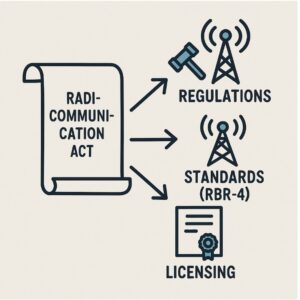
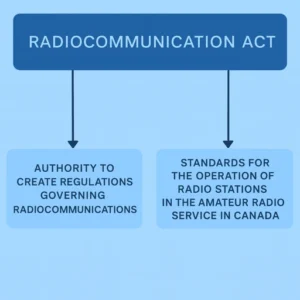
At the heart of this framework is the Radiocommunication Act. This Act gives the Canadian government the authority to create and enforce regulations that govern radio operations. It is the document that underpins everything from licensing to technical standards. For example, the Radiocommunication Act specifically assigns the power to create regulations governing radiocommunications, including the amateur service. It also authorizes the
publication of technical standards such as the RBR-4 Standards for the Operation of Radio Stations in the Amateur Radio Service in Canada. Without this legislative foundation, there would be no formal standards for amateur radio to operate within Canadian law.
B-001-001-001, B-001-001-002
 🏛️ Who manages the rules once they are created?
Once the Radiocommunication Act defines the rules, someone needs to administer and enforce them. That job belongs to Innovation, Science and Economic Development Canada—often referred to as ISED. This federal department handles the day-to-day management of spectrum access across the country, including amateur radio, commercial broadcasting, cellular, and more.
For hams, ISED is the department that issues operator certificates, investigates interference complaints, and sets national policies on spectrum allocation. When you apply for a callsign or have technical questions about your station’s compliance, you’re working within ISED’s jurisdiction.
B-001-001-003
📖 What defines amateur radio in Canada?
While the Radiocommunication Act lays the groundwork, the detailed rules that define the amateur radio service are found in the Radiocommunication Regulations. These regulations specify what amateur radio is, who qualifies, what privileges they get, and what limitations apply. They’re the practical guidebook that turns legal authority into operating reality.
The Radiocommunication Regulations outline expectations for operator conduct, station identification, power limits, and frequency usage. They ensure the service remains non-commercial and focused on technical learning, experimentation, and emergency support. This document plays a key role in preserving the spirit of amateur radio while also ensuring consistent national standards.
B-001-001-004
B-001-001 Lesson Summary
| Concept | What It Means | Formula / Term | Why It Matters |
|---|---|---|---|
| Legal Foundation | Amateur radio in Canada exists because federal law authorizes it through the Radiocommunication Act. | Radiocommunication Act | Creates the legal right to operate and ensures radio rules are applied consistently nationwide. |
| Regulatory Authority | The federal department ISED ( Innovation, Science and Economic Development Canada ) manages the amateur service. | ISED | Oversees licensing, callsigns, and interference issues to keep the spectrum organized and fair for all users. |
| Operating Rules | The Radiocommunication Regulations outline who may operate and how stations must be run safely and responsibly. | Radiocommunication Regulations | Define operator conduct, station identification, and technical limits to keep the hobby safe and non-commercial. |
| Technical Standards | The RBR-4 Standards document sets the technical requirements for equipment and operation. | RBR-4 Standards | Ensures stations meet consistent performance levels and minimize interference across Canada. |
| Purpose of Amateur Radio | Amateur radio is a non-commercial service for learning, experimentation, and public service. | Non-Commercial Service | Supports education and community communication while preserving the spirit of self-training and public benefit. |
📋 Lesson Practice Exam ▼

B-001-002 – Licence Fee, Term, Posting Requirements, Change of Address
Changes in address, lost certificates, or even call sign upgrades are part of every ham’s journey and understanding the requirements around fees, certificate validity, and address changes ensures that you stay compliant with federal regulations and avoid penalties or lapses in your operating privileges.
This section focuses on the core responsibilities every amateur operator in Canada must know about their certificate: how long it’s valid, where it should be stored, and what to do when you move.
📨 What should you do when your address changes?
When you move, your Amateur Radio Operator Certificate doesn’t automatically update. You are required to Inform Innovation, Science and Economic Development Canada of your new mailing address. This must be done within 30 days of the change. Not doing so can result in administrative complications or delays in important notices from ISED.
Remember, you must notify Innovation, Science and Economic Development Canada within 30 days of a change of mailing address. This ensures your contact information stays current in the national licensing system and that your certificate remains valid.
B-001-002-001, B-001-002-003
🪪 How long does your certificate last—and where should it be kept?
In amateur radio, passing the Basic exam isn’t just a milestone—it’s a lifetime achievement. Once you’ve earned it, your Amateur Radio Operator Certificate is valid forever. It doesn’t expire, and there’s no need to renew it. The qualification is yours for life, a permanent recognition of your status as a licensed Canadian amateur radio operator.
But with that privilege comes an important responsibility: the certificate must be accessible when needed. According to the regulations, it must be retained at the station. This means it must be physically present and available where the station is located. If a radio inspector asks to see your Amateur Radio Operator Certificate, or a copy thereof, you are legally required to produce it within 48 hours. Keeping your certificate handy isn’t just good practice—it’s part of staying compliant.
B-001-002-002, B-001-002-004, B-001-002-005
🏠 Where should your certificate be kept when you’re not operating?
Many hams assume that if they’re not currently on the air or don’t have a home station set up, the location of their certificate doesn’t matter. But the regulations are clear: it must be retained at the address provided to Innovation, Science and Economic Development Canada. This helps ensure consistency in enforcement and clarity if there’s ever an audit or investigation related to your callsign.
Having your certificate at the address you provided helps you demonstrate compliance, especially during times when you’re not actively operating but remain a licensed amateur.
B-001-002-007
💰 Are there fees for issuing or changing your certificate?
There’s good news for new operators: the initial cost to become licensed is Free. Likewise, if you move to another province or territory and request a new call sign prefix to reflect your location, that update is also Free.
However, if you want to change your current call sign voluntarily—such as upgrading to a two-letter suffix—there is a fee. That cost is 60 dollars.
B-001-002-006, B-001-002-008, B-001-002-009
B-001-002 Lesson Summary
| Concept | What It Means | Formula / Term | Why It Matters |
|---|---|---|---|
| Change of Address | You must inform ISED within 30 days whenever your mailing address changes. | 30-Day Notification Rule | Keeps your licence record current and ensures you receive all official correspondence from the regulator. |
| Certificate Validity | Your Amateur Radio Operator Certificate never expires once earned. | Lifetime Licence | Confirms your ongoing qualification as an amateur operator without renewals or additional fees. |
| Certificate Location | The certificate must be retained at the station or at your registered address. | Posting Requirement | Ensures the document can be shown to an inspector within 48 hours and verifies station compliance. |
| When Not Operating | Even if you’re off the air, the certificate should stay at the address on record with ISED. | Registered Address Rule | Maintains traceability of your licence and simplifies future audits or correspondence. |
| Licence Fees | There’s no fee for your initial certificate or for updating an address or prefix. Voluntary call-sign changes cost $60. | Fee Schedule | Clarifies which administrative changes are free and which incur a cost, helping you plan updates responsibly. |
📋 Lesson Practice Exam ▼
📘 B-001-003 – Licence Suspension or Revocation, Powers of Radio Inspectors, Offences and Punishments
Operating in the amateur radio service comes with privilege—but also responsibility. These responsibilities aren’t just moral or technical, they’re legal. Canada’s Radiocommunication Act and associated regulations set clear boundaries, enforce penalties, and empower inspectors to investigate violations. Understanding where those lines are is important to maintaining your certificate and protecting the amateur bands.
In this lesson, we’ll look at what kinds of actions can get an amateur operator into trouble, from out-of-band transmissions and false distress signals to interfering with legitimate communications. We’ll also explore the powers of ISED and radio inspectors—what they can do, and where their authority stops.
🚫 What happens if you transmit outside the amateur bands?
Each amateur operator in Canada is authorized to transmit only on frequencies allocated to the amateur service. Going beyond these limits—either intentionally or accidentally—can create interference to sensitive services like aviation, marine safety, or emergency communications.
To prevent this, transmissions outside amateur bands are prohibited and penalties could be assessed to the control operator. It’s the control operator’s legal duty to ensure their equipment is operating within assigned boundaries.
B-001-003-001
🆘 What are the consequences of faking an emergency?
Emergency phrases like “MAYDAY” carry life-and-death weight. Using them without a genuine emergency isn’t just irresponsible—it’s illegal. If an operator falsely transmits the word “MAYDAY,” it’s considered A false or fraudulent message under Canadian regulations.
Transmitting false information is never permitted, and potentially risks diverting emergency services, delaying aid to real victims, or interfering with emergency or commercial stations.
B-001-003-002, B-001-003-007
⚖️ What penalties could you face for serious violations?
Some offences—like false distress signals or intentional interference—go beyond technical violations. These are criminal matters under the Radiocommunication Act, and they carry serious penalties. If found guilty of either, the offender may be sentenced to A fine, not exceeding $5 000, or a prison term not exceeding one year, or both.
This penalty applies whether the violation was a prank, an act of defiance, or simply reckless behavior. Even if no harm was intended, to interfere with, or obstruct any radio communication, without lawful cause is considered unlawful and is taken seriously under federal law.
B-001-003-003, B-001-003-008
📜 Where are these rules written down?
All offences, penalties, enforcement powers, and legal definitions related to amateur radio in Canada are laid out in the The Radiocommunication Act. This law authorizes ISED to issue, suspend, or revoke certificates, defines illegal transmissions, and establishes penalties.
Every operator should be familiar with the contents of the Act, as it serves as the legal foundation for amateur radio—it’s the rulebook that protects the shared amateur radio spectrum from misuse.
B-001-003-004
🛑 Can inspectors or the Minister act without due process?
Inspectors and the Minister of Innovation, Science and Industry have the authority to enforce regulations—but that authority has boundaries. For example, it’s not correct to assume A radio inspector may enter a dwelling without the consent of the occupant and without a warrant. Canadian law protects the privacy of your home, even during investigations.
Similarly, the Minister may suspend an Amateur Radio Operator Certificate for cause, but this never occurs with no notice, or opportunity to make representations thereto. Due process is built into the enforcement process, ensuring fairness and accountability.
B-001-003-005, B-001-003-006
B-001-003 Lesson Summary
| Concept | What It Means | Formula / Term | Why It Matters |
|---|---|---|---|
| Transmitting Outside Amateur Bands | Operators may only use frequencies assigned to the amateur service. Transmissions beyond these limits can interfere with protected services. | Band Compliance | Staying within authorized bands prevents interference with aviation, marine, and emergency systems and protects the operator’s licence. |
| False Emergency Calls | Using distress signals such as “MAYDAY” without a real emergency is illegal and considered a fraudulent message. | False or Fraudulent Transmission | Misuse of emergency signals diverts responders and is treated as a serious offence under federal law. |
| Penalties for Violations | Deliberate interference or fraudulent transmissions can result in fines up to $5,000, imprisonment for up to one year, or both. | Criminal Penalty | Highlights the legal seriousness of misuse and reinforces personal responsibility for lawful operation. |
| Legal Source of Authority | All offences, penalties, and enforcement powers are detailed in the Radiocommunication Act, which governs amateur radio in Canada. | Radiocommunication Act | Provides the legal framework protecting the spectrum and ensuring fair enforcement across all radio services. |
| Inspector and Ministerial Powers | Inspectors cannot enter a private dwelling without consent and a warrant. The Minister may suspend or revoke a certificate only with notice and opportunity to respond. | Due Process | Guarantees fairness and privacy while maintaining the government’s ability to enforce radio regulations responsibly. |
📋 Lesson Practice Exam ▼
B-001-004 – Operator Certificates, Applicability, Eligibility, Equivalents, and Recognition
Becoming a certified amateur radio operator in Canada isn’t just about passing an exam—it’s about understanding how qualifications work, what legal criteria apply, and how certifications from other services or countries might translate. This lesson breaks down the pathway to your first certificate, what qualifications unlock additional privileges, and how special cases like maritime certification or Morse code fit into the bigger picture.
You’ll also learn the important requirements every candidate must meet to earn their certificate and what it means to hold an Advanced qualification.
🎓 Who can get certified as a ham operator in Canada?
One of the great things about amateur radio is that There are no age limits for being granted an Amateur Radio Operator Certificate with Basic Qualification.
However, all candidates must Have a valid address in Canada. This ensures that operators can be properly licensed, reached for updates, and held accountable under Canadian regulations. As long as you’re located in Canada, you’re eligible to be certified!
B-001-004-001, B-001-004-007
📝 What do you need to pass to get your certificate?
Before you can receive your certificate, you must pass the standard written exam covering operating practices, regulations, and basic electronics. This is known as the Basic Qualification. It’s the foundation for all further privileges in amateur radio.
Additionally, if you already hold another recognized certificate—like the Canadian Radiocommunication Operator General Certificate Maritime (RGMC)—you may also be issued an Amateur Radio Operator Certificate without retaking the Basic exam. This recognition of equivalent training helps professionals from other radio services transition into amateur radio more easily.
B-001-004-002, B-001-004-003
🔁 How are additional qualifications earned?
Once you’ve earned your Basic Qualification, you’re free to explore further privileges through Advanced or Morse qualifications. These additional qualifications can be obtained in any order. You might choose to pursue your Morse Qualification first, or go straight into the Advanced exam.
B-001-004-004
✉️ What’s required for the Morse code endorsement?
Although Morse code is no longer required to obtain HF privileges. for most privileges, it’s still offered as an optional endorsement for those interested in CW (continuous wave) operation. To qualify, you must demonstrate both sending and receiving skills at a speed of 5 wpm (words per minute).
This relatively low threshold means that almost anyone can learn Morse with a bit of practice. In Canada, Morse code is no longer required to access HF bands (below 30 MHz). Instead, operators have two ways to qualify for HF privileges:
- Score 80% or higher on the Basic Qualification exam, or
- Pass the Advanced exam (or hold the older Morse code qualification)
This change, made in 2005, modernized access rules while still ensuring operators have a strong grasp of radio fundamentals before using the HF bands.
B-001-004-005
🚫 What does the Advanced Certificate not allow?
The Advanced Qualification unlocks powerful new privileges within the amateur radio service, including homebrewing transmitters, higher power levels, and operating repeaters. But that authorization applies to amateur service only.
If you’re wondering whether it lets you operate in other services—like aviation, marine, or commercial—the answer is simple: No other service. Holding an Advanced Amateur Radio Operator Certificate gives you extra rights in the amateur bands, but nothing beyond them.
B-001-004-006
B-001-004 Lesson Summary
| Concept | What It Means | Formula / Term | Why It Matters |
|---|---|---|---|
| Eligibility for Certification | Anyone with a valid Canadian mailing address may be granted an Amateur Radio Operator Certificate. There are no age limits. | Canadian Address Requirement | Ensures operators can be contacted and held accountable under Canadian regulations. |
| Basic Qualification | Applicants must pass a written exam covering regulations, operating practices, and electronics fundamentals to earn the Basic Qualification. | Basic Exam | Serves as the foundation for all amateur privileges and is required before transmitting on any amateur frequency. |
| Recognition of Equivalents | Holders of certain recognized certificates, such as the Radiocommunication Operator General Certificate Maritime (RGMC), may receive an Amateur Radio Certificate without retaking the Basic exam. | Certificate Equivalency | Allows qualified radio professionals to transition easily into the amateur service. |
| Additional Qualifications | After earning Basic, operators may add Advanced or Morse endorsements in any order to expand their privileges. | Advanced / Morse Options | Encourages skill growth and access to higher power and additional modes as knowledge increases. |
| Morse Code Endorsement | A separate optional qualification requiring sending and receiving Morse at 5 words per minute. Not required for HF access since 2005. | 5 WPM Requirement | Honors traditional operating skills while keeping modern licensing flexible and inclusive. |
| Advanced Certificate Limitations | The Advanced Qualification grants more power and technical privileges but does not permit operation in any non-amateur service. | Amateur Service Scope | Clarifies that even advanced privileges apply only within the amateur bands and services. |
📋 Lesson Practice Exam ▼

📘 B-001-005 – Operation, Repair and Maintenance of Radio Apparatus on Behalf of Other Persons
In amateur radio, operators often collaborate, assist with station setup, or lend a hand in troubleshooting someone else’s gear. But there are limits to what you’re allowed to do on behalf of another person—even if you both hold certificates. This section explores when you can legally help, install, program, or repair equipment that doesn’t belong to you.
You’ll learn who must be certified, what kind of authorization is needed, and where regulatory lines are drawn. Understanding these conditions will help you avoid unintentionally violating licensing privileges.
🔧 Can you work on someone else’s equipment?
If you hold an Advanced Qualification, you’re permitted to build, repair, or modify amateur radio equipment—but only on behalf of another person who is authorized to operate it. In other words, you may do so if the other person holds an authorization for this apparatus. This ensures that all equipment remains tied to a licensed operator and is used within the bounds of amateur radio regulations.
The same rule applies to specialized modifications, like converting a land mobile transmitter for amateur use. Even if you have the technical skills, you can perform this work only if the other person holds an Amateur Radio Operator Certificate. These rules uphold accountability by preventing unauthorized modifications for unlicensed individuals.
B-001-005-001, B-001-005-002
🛠️ What must be true to install, repair, or place a transmitter in service?
Working on someone else’s amateur radio station—whether installing a new unit, running cables, tuning output, or placing a transmitter into service—means you must follow specific rules. Even with an Advanced Qualification, you’re not allowed to perform work that would let another person operate equipment beyond their certified privileges. The equipment must remain within the legal limits of the other person’s authorization.
Whether it’s a minor repair or a complete setup, the requirement is the same: both you and the other person must hold Amateur Radio Operator Certificates.
B-001-005-003, B-001-005-005, B-001-005-006
🧾 What if you have Morse and Basic qualifications?
Holding the Morse code qualification, along with your Basic certificate, extends your operating privileges in specific ways. One of these is the ability to assist with the installation of a complete amateur radio station for another licensed operator. But this privilege has limits…you can’t just set up a station for anyone.
You may perform the installation only if the other person is the holder of a valid Amateur Radio Operator Certificate. They must be legally authorized to operate the equipment once it’s installed. Without that certification on their end, even a qualified installer is not permitted to carry out the work.
B-001-005-004
B-001-005 Lesson Summary
| Concept | What It Means | Formula / Term | Why It Matters |
|---|---|---|---|
| Working on Another’s Equipment | Advanced operators may build or repair amateur gear for another person only if that person is authorized to use it. | Authorized Operation Rule | Ensures all equipment remains linked to a licensed holder and prevents unlicensed use. |
| Repairs and Installation | You can install or service a transmitter only when both you and the station owner hold valid certificates. | Mutual Certification Requirement | Keeps every installation within the operator’s authorized privileges and technical limits. |
| Basic and Morse Privileges | Operators with Basic plus Morse qualifications may help install a complete station for another certified amateur. | Assisted Installation | Allows cooperation among licensed hams while maintaining control by an authorized operator. |
| Unauthorized Modifications | No one may modify or convert equipment for unlicensed individuals or non-amateur use. | Regulatory Boundary | Prevents misuse of amateur gear and protects spectrum integrity. |
| Accountability | Both the helper and the station owner are responsible for ensuring lawful operation. | Shared Responsibility | Promotes cooperation while keeping compliance clear for every project or repair. |
📋 Lesson Practice Exam ▼
📘 B-001-006 –Operation of Radio Apparatus, Terms of Licence, Applicable Standards, Exempt Apparatus
Amateur radio is a licensed service governed by strict technical standards and operating rules. Whether you’re transmitting across town or tuning up a handheld VHF rig, you need to know where the legal lines are drawn. Some equipment may look flexible enough to be used across services—but staying within your authorized bands helps ensure safe, responsible, and interference-free communication.
This lesson explores who can use certain transmitters, when low-power devices need supervision, and why crossing frequency boundaries can have consequences.
🎚️ Who can operate low-power amateur transmitters?
Small transmitters, including those with power outputs of just a couple of watts, are still subject to regulation in Canada. Just because the power is low doesn’t mean the responsibilities are too. An amateur radio station with a maximum power output of 2 watts must be under the supervision of a person holding an Amateur Radio Operator Certificate and call sign.
This ensures that even very low-power operations follow proper procedures, identification rules, and don’t cause unintentional interference. Supervision is always required—even for beginners learning with simple gear.
B-001-006-001
📡 Who can you legally talk to on the air?
It’s important to know who you’re allowed to communicate with on amateur frequencies. You can’t just reach out to anyone with a radio; an amateur radio station may be used to communicate only with stations operated under similar authorizations.
That means licensed amateur operators—whether in Canada or internationally—who follow equivalent standards. Communicating with unauthorized, unlicensed, or commercial stations outside the amateur service may violate the terms of your certificate.
B-001-006-002
🔇 Can you amplify licence-exempt transmissions?
Some devices, such as certain short-range license-free transmitters (e.g., walkie-talkies, Wi-Fi devices), operate under licence exemptions. It may be tempting to boost their range using amateur gear. However, amateur radio operators are not permitted to use their equipment to enhance or extend the performance of licence-exempt transmitters. This is not permitted under any circumstances.
B-001-006-003
🚫 Can amateur equipment transmit outside amateur bands?
When is it permissible to transmit outside amateur radio bands using amateur equipment? Never, amateur radio equipment is not certified for operation outside amateur radio bands. Amateur radios are certified for use only within specific frequency bands. Even with modifications, they aren’t legally approved for transmitting on commercial, public safety, or other frequencies.
This restriction ensures safety, prevents harmful interference, and protects essential services that rely on clean, regulated spectrum use.
B-001-006-004
🛑 What are you not allowed to do with amateur radio equipment?
While amateur radio privileges are extensive, they don’t cross into other services such as use on aeronautical, marine or land mobile frequencies. These bands fall under entirely different licensing systems, each with its own technical and regulatory requirements.
Misusing amateur gear on these frequencies is both a technical and legal violation and can have enforcement consequences.
B-001-006-005
📻 When can dual-use radios be used legally?
Some VHF/UHF FM radios are capable of being programmed to operate in the land mobile service bands. This flexibility is useful, but only legal under specific conditions. If you want to use such a radio on land mobile frequencies, it must meet one key requirement: The radio is certified and licensed for use in the land mobile service.
Without this certification, using amateur gear on non-amateur frequencies—even if technically possible—is unlawful and can interfere with protected services like emergency or public works communications.
B-001-006-006
B-001-006 Lesson Summary
| Concept | What It Means | Formula / Term | Why It Matters |
|---|---|---|---|
| Low-Power Transmitters | Any transmitter, even under 2 watts, must be supervised by a certified operator using a valid call sign. | Supervised Operation | Ensures beginners learn under control and all signals stay traceable to a licensed operator. |
| Authorized Contacts | Amateur stations may only communicate with other licensed amateur stations operating under similar authorizations. | Like-to-Like Rule | Prevents unauthorized or commercial use of amateur frequencies. |
| Licence-Exempt Devices | Amateur operators cannot boost or relay licence-exempt transmitters using amateur gear. | No Amplification Rule | Protects shared spectrum and prevents illegal signal enhancement. |
| Transmission Boundaries | Amateur radios must only transmit within the amateur bands for which they are certified. | Band Limitation | Avoids interference with public-safety, marine, and commercial services. |
| Use in Other Services | Amateur equipment may not be used on aeronautical, marine, or land-mobile frequencies. | Service Restriction | Keeps amateur privileges separate from other licensed services. |
| Dual-Use Radios | Radios that cover land-mobile bands can only be used there if they are certified and licensed for that service. | Proper Certification | Ensures compliance and prevents interference with critical communications. |
📋 Lesson Practice Exam ▼
📘 B-001-007 – Content Restrictions: Non-Superfluous, Profanity, Secret Code, Music, Non-Commercial
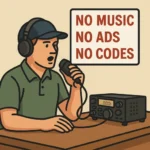
Amateur radio isn’t just about how we communicate—it’s also about what we’re allowed to say and share on the air. The amateur bands are not public broadcast services. They’re intended for personal, technical, and emergency use, with strict content guidelines. Certain types of communication—like business talk, music, encrypted codes, and public broadcasts—are off-limits entirely.
This lesson outlines the speech, topics, and signals that are permitted—and not permitted—under Industry Canada rules. It’s all about keeping the amateur service educational, non-commercial, and transparent.
📵 What topics and messages are strictly prohibited?
Amateur radio is not a replacement for commercial broadcasting or business communication. On-air discussions must be personal, technical, or hobby-related. Topics like Business planning are not allowed on nets or regular QSOs. In fact, In the amateur radio service, business communications are not permitted under any circumstance.
Similarly, broadcasts intended for the general public are strictly forbidden. These include pre-recorded shows, music transmissions, or anything resembling a commercial or entertainment radio service. The rules are clear: An amateur radio operator may never broadcast to the general public.
B-001-007-001, B-001-007-002, B-001-007-004, B-001-007-011
❌ What is not correct about amateur communications?
Some operators mistakenly believe that making occasional business-related comments—such as mentioning a sale or coordinating a delivery—is acceptable on the amateur bands. In reality, an amateur radio operator may conduct occasional business on the air is not allowed. Even brief references to commercial activity violate both the regulations and the non-commercial spirit of amateur radio.
Amateur radio exists for education, experimentation, and public service—not for business. Keeping the airwaves free of commercial use preserves fairness and ensures the hobby remains focused on learning and community.
B-001-007-003
🔐 Can you use secret codes, abbreviations, or encryption?
The amateur radio service is built on the principle of openness. Operators can use standard Q codes and abbreviations, but only if the meanings are widely understood. That’s why use of abbreviations if the signals or codes are not secret is permitted. Any communication that intentionally conceals meaning, even partially, goes against the purpose of amateur radio.
This same standard applies to digital modes. If you’re experimenting with new encoding techniques, you may only transmit them when it is published in the public domain. Even then, only when the encoding or cipher is not secret may a station transmit an encoded message. The expectation is that all amateur communications remain open to inspection by others in the amateur community. Above all, the transmission of a secret code by the operator of an amateur radio station is not permitted.
B-001-007-005, B-001-007-006, B-001-007-007, B-001-007-009, B-001-007-010
🎶 How do you prevent unintentional violations like retransmitting music?
Music and other non-amateur signals are not allowed on the amateur bands, even if they’re transmitted accidentally. Many violations occur when music plays in the background during a QSO—especially if a mic picks up a nearby radio or streaming device.
The simple fix…Turn down the volume of background audio. Be mindful of what your mic is capturing.
B-001-007-008
B-001-007 Lesson Summary
| Concept | What It Means | Formula / Term | Why It Matters |
|---|---|---|---|
| Non-Commercial Use | Amateur radio cannot be used for business discussions, sales, or any commercial purpose. | Business Prohibition | Keeps amateur radio focused on education, experimentation, and public service, not profit. |
| Public Broadcasting | Amateur stations may not transmit to the general public or play music, news, or entertainment content. | No Broadcast Rule | Prevents the amateur bands from being used like commercial radio services. |
| False Business Activity | Even brief or casual business talk, such as advertising or product mentions, is not allowed. | Commercial Content Restriction | Protects the integrity of the hobby and avoids regulatory violations. |
| Secret Codes and Encryption | Operators may use Q codes and common abbreviations but never private or secret codes that hide meaning. | Open Communication | Ensures transparency and allows all transmissions to be monitored by the amateur community. |
| Music and External Audio | Music or other non-amateur audio cannot be transmitted, even accidentally through an open microphone. | Music Ban | Prevents copyright violations and keeps the bands clear for two-way communication. |
| Educational and Personal Focus | All amateur communication should support learning, experimentation, or personal contact between operators. | Purpose of Service | Maintains the hobby’s core values of openness, community, and non-commercial cooperation. |
📋 Lesson Practice Exam ▼
📘 B-001-008 – Installation and Operating Restrictions: Number of Stations, Repeaters, Home-Built, Club Stations
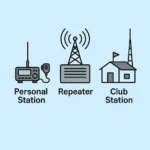
Operating a station in Canada comes with technical privileges—but also specific qualifications for certain types of installations. Whether you’re running a simple home rig, setting up a repeater, or helping install a club station, your level of certification determines what you’re legally allowed to do.
This section focuses on who can build, install, or operate different types of amateur stations—including cross-band repeaters, remote transmitters, and non-commercial RF amplifiers. Knowing your limitations is part of operating responsibly.
📍 Where can you operate in Canada—and what about one-way signals?
Holders of a valid certificate aren’t limited by province or region. In fact, authorized amateurs may legally operate Anywhere in Canada. Whether you’re on a backcountry camping trip in BC or at a cottage in Nova Scotia, your callsign and privileges go with you.
However, not every kind of transmission is allowed in every context. One-way communications, for instance, are typically restricted—but there’s one exception. A Beacon station may transmit one-way communications for propagation testing and similar functions.
B-001-008-001, B-001-008-002
🧰 Can anyone assemble or install amateur gear?
Assembling gear isn’t the same as building from scratch. To legally put together professionally designed transmitter kits, an operator must hold at least the Basic qualification. This ensures the operator understands safety, component handling, and legal limitations.
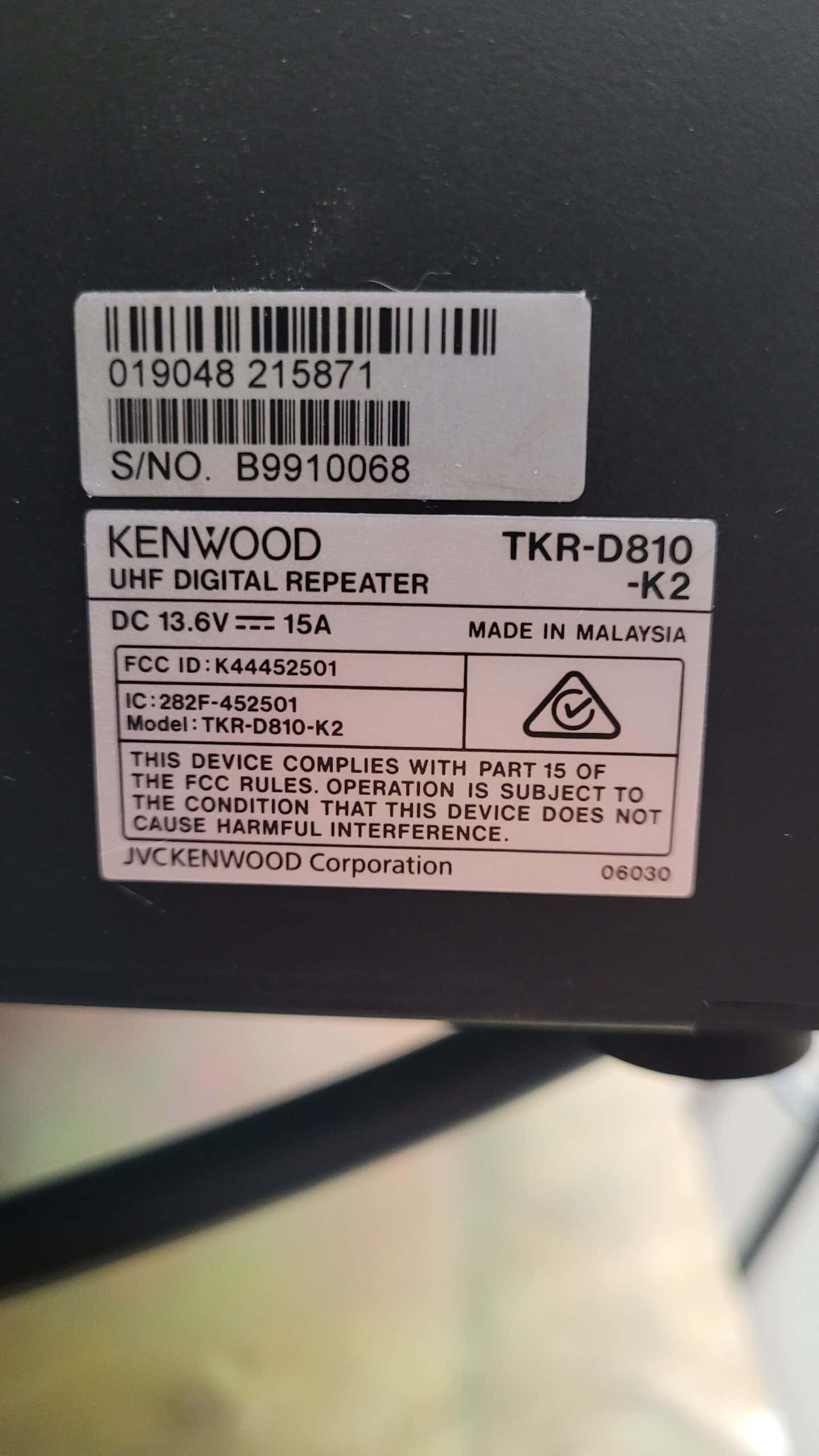
But for more advanced installations—such as setting up a repeater, club station, or working with non-commercial gear—more knowledge is required. In these cases, operators must hold Basic and Advanced certification. These tasks involve higher technical responsibility and potential for broader RF exposure or interference, so the elevated qualification makes sense.
B-001-008-003, B-001-008-004, B-001-008-005, B-001-008-006
🔁 Can you operate a cross-band repeater or remote transmitter?
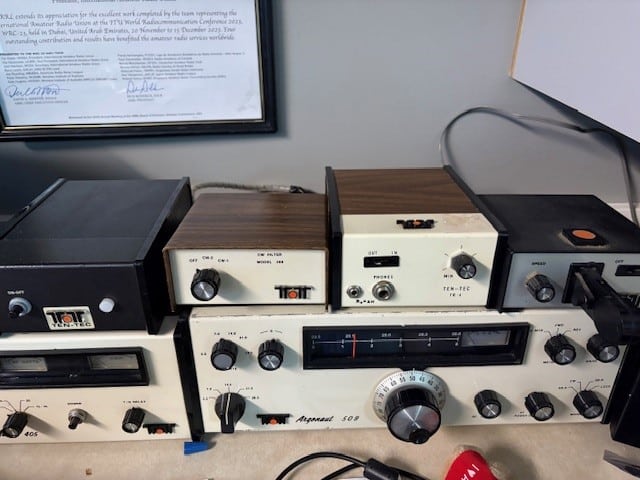
Cross-band repeaters are an important tool in amateur radio, allowing signals to be relayed across bands for greater coverage. These setups are relatively straightforward and require only a Basic qualification to operate. That means most hams can explore this feature as soon as they’re licensed.
However, controlling a transmitter remotely including adjusting frequency, output power, or emission mode is a more advanced procedure. The operator must hold Basic and Advanced qualifications to comply with the regulations,.
B-001-008-007, B-001-008-008
B-001-008 Lesson Summary
| Concept | What It Means | Formula / Term | Why It Matters |
|---|---|---|---|
| Nationwide Operation | Licensed amateurs may operate anywhere in Canada; callsigns and privileges are valid nationwide. | Portable Privilege | Provides freedom to operate while travelling without additional licensing. |
| One-Way Signals | One-way transmissions are not permitted except for beacon stations used in propagation testing. | Beacon Exception | Allows limited one-way signals for research while avoiding unauthorized broadcasting. |
| Building or Assembling Gear | Operators with a Basic qualification may assemble or use transmitter kits designed for amateur use. | Basic Kit Assembly | Encourages learning and safe building practices within licensed limits. |
| Advanced Installations | Installing repeaters, club stations, or experimental transmitters requires both Basic and Advanced certificates. | Advanced Installation | Ensures technically complex or high-power systems are handled by qualified operators. |
| Cross-Band Repeaters | Cross-band repeater operation is permitted with a Basic qualification. | Basic Repeater Privilege | Gives new operators experience in relaying signals responsibly within amateur bands. |
| Remote Transmitter Control | Changing frequency, power, or mode remotely requires both Basic and Advanced qualifications. | Remote Operation Rule | Prevents misuse of remotely controlled stations and ensures accountability. |
📋 Lesson Practice Exam ▼
📘 B-001-009 – Participation in Communications by Visitors, Use of Station by Others
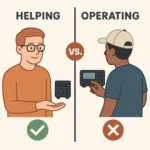
Operating your amateur radio station isn’t just about what you do—it’s about who else uses your equipment, how they’re supervised, and what your responsibilities are when guests or family members get on the mic. The control operator has legal responsibility while transmitting, and the station owner shares that responsibility in ensuring the station complies with regulations.
This section outlines who may operate, under what conditions, and how to stay compliant when others use your radio gear—whether they’re licensed or not.
👥 Who’s responsible for the station’s operation?
Running a station isn’t a solo responsibility. Legally, Both the control operator and the station owner are responsible for how the station is operated. That’s true whether you’re using your own station or someone else’s.
If you transmit from another station, it’s not just the owner’s responsibility. In that case, Both of you are jointly responsible. And if you own a station, You are responsible for the operation of the station in accordance with the regulations—even if someone else is using the gear under your permission.
B-001-009-001, B-001-009-002, B-001-009-003
🎙️ Who can be a control operator—and when are they required?
You can’t just let anyone operate your station unsupervised. The control operator must be Any qualified amateur radio operator chosen by the station owner. Whether it’s a club net, public demonstration, or just casual operation, someone qualified must be in control at all times.
A control operator must be present? Whenever the station is transmitting. That control operator must also be physically located At the station’s control point. There’s no “autopilot” mode in amateur radio—if it’s on the air, someone qualified must be in control.
B-001-009-004, B-001-009-005, B-001-009-006
👪 Can your friends or family use your station?
Friends or family members who are not licensed may only operate your station if you are right there supervising them. You must remain present and in control of the station at all times, and the responsibility for every transmission rests with you as the certificate holder.
The rules state clearly: They must hold suitable amateur radio qualifications before they are allowed to be control operators. If they aren’t licensed, they can still transmit—but only if When the person is under supervision, and in the presence of, a person holding appropriate qualifications. In short, unlicensed operators can only go on-air while directly observed by a certified amateur.
B-001-009-007, B-001-009-009
🆗 What can the station owner authorize?
As the station owner, you’re allowed to let others use your radio—but only under proper conditions. You may permit any person to operate the station under the supervision and in the presence of the holder of an Amateur Radio Operator Certificate. That means you’re responsible for ensuring they’re watched closely and that no violations occur on your watch.
Being a responsible station owner involves knowing these rules and following them anytime you invite someone to use your gear—whether they’re a curious friend or a new ham getting on the air for the first time.
B-001-009-008
B-001-009 Lesson Summary
| Concept | What It Means | Formula / Term | Why It Matters |
|---|---|---|---|
| Shared Responsibility | Both the control operator and the station owner are legally responsible for proper station operation. | Joint Accountability | Clarifies that neither party can avoid responsibility for illegal or improper transmissions. |
| Control Operator Requirement | Every transmitting station must have a qualified control operator chosen by the station owner. | Qualified Control | Ensures that a certified person is always in charge whenever the transmitter is active. |
| Control Point Presence | The control operator must be physically present at the control point whenever the station is on the air. | Active Supervision | Prevents unattended operation and maintains immediate control over all transmissions. |
| Unlicensed Guests | Friends or family may operate only when directly supervised by a licensed amateur who is present. | Supervised Operation | Allows demonstrations and training while keeping responsibility with the licensed operator. |
| Owner Authorization | A station owner may allow others to use the station only under supervision by a qualified certificate holder. | Permission Rule | Ensures proper oversight and compliance whenever guests or club members use shared equipment. |
📋 Lesson Practice Exam ▼
📘 B-001-010 – Interference, Determination, Protection from Interference
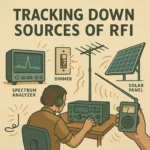
In amateur radio, managing interference is a matter of both technical skill and regulatory responsibility. Knowing what causes interference, how it’s classified, and when to stop transmitting are essential parts of operating legally. Whether you’re sharing a band with primary users or testing a new setup, it’s your duty to avoid causing problems for others.
This lesson will help you understand the definitions and rules around interference, how band-sharing works, and what authority Industry Canada has to protect the airwaves.
📡 What is harmful interference—and when is it never allowed?
Any time your transmission affects another service’s ability to operate normally, it’s considered interference. When that interference is especially disruptive or persistent, it’s classified as Harmful interference. This includes blocking, degrading, or repeatedly interrupting communication signals.
There is zero tolerance for intentional interference on the amateur bands. Deliberate interference is never acceptable. No matter the reason or personal dispute, malicious jamming or intentional QRM violates regulations and could lead to fines and suspension.
B-001-010-001, B-001-010-002, B-001-010-005
🔄 Who gets priority—and what if multiple hams want the same frequency?
Amateur radio operators are allowed to use the frequency band only if they do not cause interference to primary users if amateur radio is listed as a “secondary user” of a frequency band. For example, hams often share bands with government, public safety, or commercial systems that always have priority.
When two amateurs want to use the same frequency they are required to work out the conflict cooperatively, as Both station operators have an equal right to operate on the frequency. That means—not by overpowering or jamming the other signal.
B-001-010-003, B-001-010-004
⚖️ What can the Minister do about interference?
If a station causes harmful interference, the Minister of Innovation, Science and Industry has the legal authority to intervene. This is taken seriously—especially if a station interferes with emergency or commercial communications.
In such cases, the Minister may Order the station’s operation to cease or change. This could include temporary shutdowns, frequency changes, or full suspension of operating privileges until the issue is resolved.
B-001-010-006
📶 Which bands require extra caution—and when are hams unprotected?
Some amateur bands are also shared with powerful or license-exempt devices, like industrial controllers and consumer electronics. In the 70 cm band, hams must avoid interfering with primary users operating in the 430.0 MHz to 450.0 MHz range. This means operating with care near sensitive services like military or public safety systems.
Conversely, amateur radio operations are not protected from interference in some ranges, including 902 MHz to 928 MHz. Unlicensed devices like cordless phones, baby monitors, and IoT equipment (physical objects that are connected to the internet and can collect, send, or receive data) may flood these bands, and hams have no legal protection from that interference.
B-001-010-007, B-001-010-008, B-001-010-010
🧪 When is it safe to conduct test transmissions?
Test transmissions are a routine part of station setup, tuning, and experimentation. However, operators must ensure that tests do not interfere with other users. You may only proceed When the transmission will not cause interference to stations in the amateur radio service or other services.
This includes checking SWR, adjusting power levels, or experimenting with modes. Always listen first and confirm the frequency is clear.
B-001-010-009

B-001-010 Lesson Summary
| Concept | What It Means | Formula / Term | Why It Matters |
|---|---|---|---|
| Harmful Interference | Any signal that blocks, degrades, or disrupts another service is harmful interference and never allowed. | Zero-Tolerance Rule | Protects all radio users and maintains the integrity of shared spectrum. |
| Frequency Priority | Amateurs must avoid interfering with primary users and share frequencies courteously with other hams. | Secondary-User Rule | Ensures cooperation and respect when bands are shared with government or commercial systems. |
| Ministerial Authority | The Minister of Innovation, Science and Industry can order a station to change or stop transmitting if it causes interference. | Cease-or-Change Order | Provides legal enforcement to protect critical services and emergency communications. |
| Shared and Unprotected Bands | Amateurs must use care in 430–450 MHz (shared) and have no protection in 902–928 MHz against interference from devices. | Band Caution Zones | Reminds operators that some frequencies carry extra risk of interference and limited protection. |
| Test Transmissions | Testing and tuning are allowed only when they will not cause interference to any station or service. | Check-Before-Transmit | Promotes good operating habits and prevents unintentional disruption while experimenting. |
📋 Lesson Practice Exam ▼
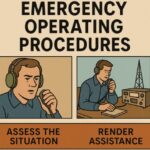
B-001-011 – Emergency Communications (Real or Simulated), Communication with Non-Amateur Stations
When disaster strikes, amateur radio operators often play a vital role. In emergency situations—whether real, simulated, or civil support—operators often help maintain communication between agencies, communities, and responders. That responsibility comes with clear rules and special permissions. It’s also a time when some normal restrictions are lifted to allow fast, effective response.
This section explores how amateur radio fits into emergency operations, including power limits, message handling, and when it’s legal to ‘bend’ the rules to save lives or assist with the communications component of disaster relief.
🆘 What can hams do in a distress or emergency situation?
During a real emergency, operators are permitted to use whatever tools are needed to get the message through. That includes using any frequency within amateur bands—even if you’re not normally authorized for it—if you hear a distress call. In such a case, you may respond and offer assistance.
An operator in distress may use any means of radiocommunication within the amateur bands to call for help. That means there’s No limitations on transmitter power, frequency privileges, or modes when life or safety is at stake. You may even interfere with another transmission—but only When your station is directly involved with a distress situation.
B-001-011-003, B-001-011-005, B-001-011-007, B-001-011-010
📡 Who can you communicate with—and when is broadcasting allowed?
Under normal conditions, amateur operators may engage in communications only with other amateur radio stations. Contact with commercial, government, or public service users is not allowed unless it occurs under officially recognized emergency protocols. Even in a disaster, operators must stay within the rules: using frequencies outside amateur radio bands is never permitted. All transmissions must take place on authorized amateur frequencies, regardless of the circumstances.
There is one exception to standard procedures during emergencies. If life or property is at immediate risk, radio communications required for the safety of life and property may be sent without concern for format or structure. This means you can abandon formal procedures and send clear, plain-language messages to get help fast. However, this does not extend to frequency use…you must still operate within your licensed amateur bands and follow all technical limits.
B-001-011-001, B-001-011-002, B-001-011-004
🛰️ When are special emergency permissions activated?
Hams may be called upon when commercial systems break down. During disasters or crises, amateur stations are permitted to transmit essential messages—but only When normal communication systems are overloaded, damaged or disrupted. This is the legal trigger for emergency amateur traffic.
During such times, operators can handle messages from public safety agencies, but only under structured arrangements. That includes During peace time, civil emergencies and exercises when practicing or assisting.
While amateur operators can send messages related to the safety of life and property during emergencies (see Section 48 of the Radiocommunication Regulations), they must still operate within the frequency bands authorized for their specific qualifications.
This means:
- A Basic-only operator without HF privileges is not legally permitted to transmit on HF, even during emergencies.
- Doing so would still be considered unauthorized operation under Canadian law.
✅ What you Can Do:
- Operate on VHF/UHF bands where you are licensed
- Relay emergency messages through repeaters or local nets
- Assist a licensed operator who has HF privileges, if present
B-001-011-006, B-001-011-009
🛑 What’s expected from operators not part of the emergency net?
One of the most helpful things an operator can do during a crisis is to give space. If you are not officially involved in an emergency net, your job is simple: Avoid needless transmissions on or near the net frequency. That includes tuning up, testing, or chatting nearby, all of which can block or degrade emergency communications.
Silence, in this case, is a form of participation. Listen first—and don’t transmit unless you’re part of the net or offering legitimate assistance.
B-001-011-008
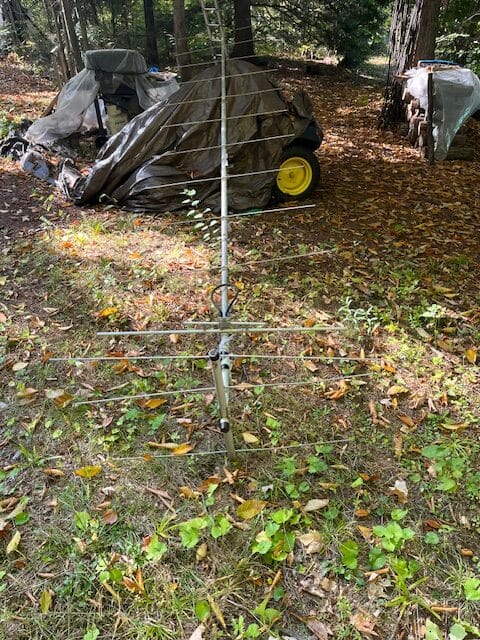
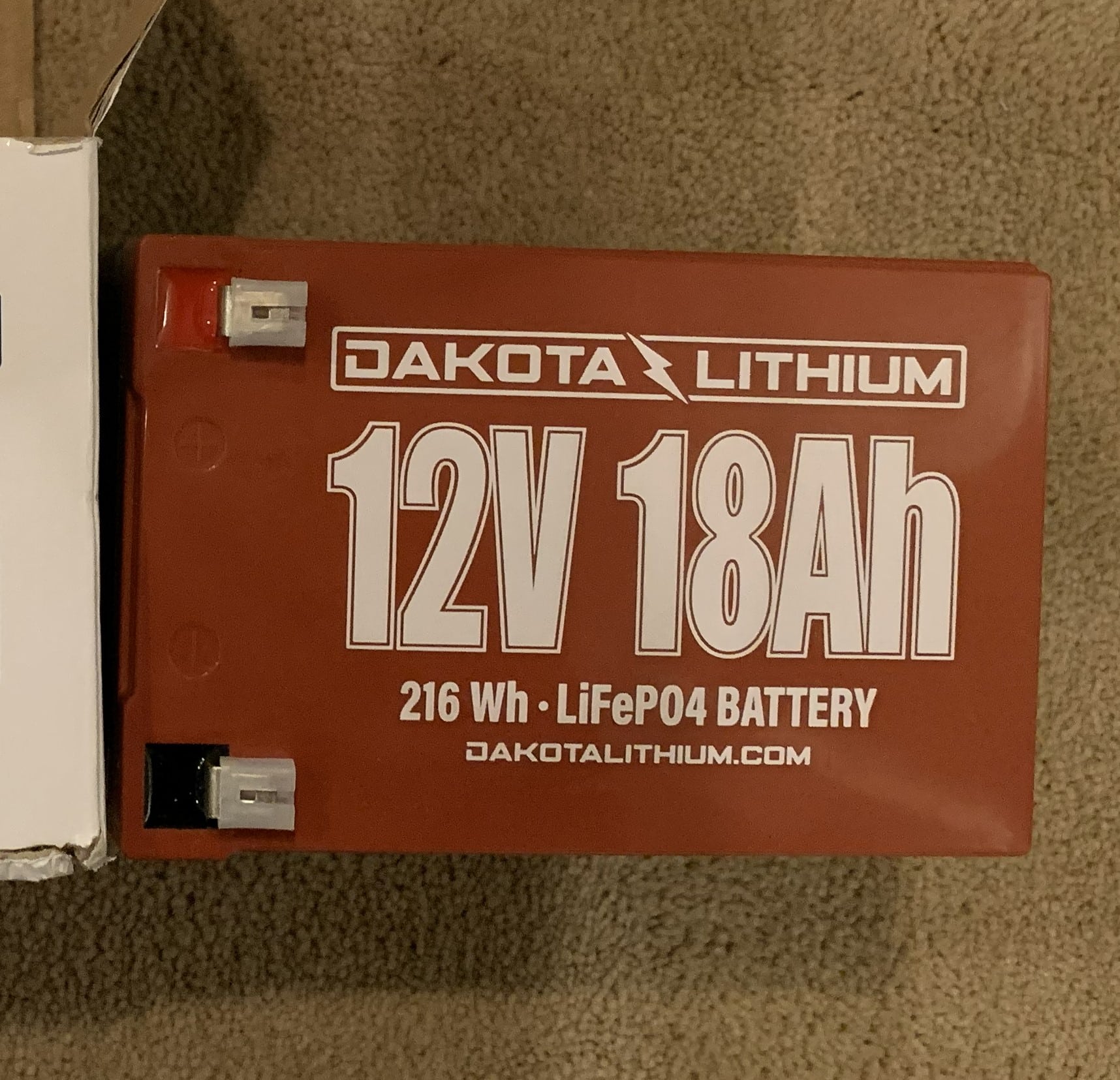
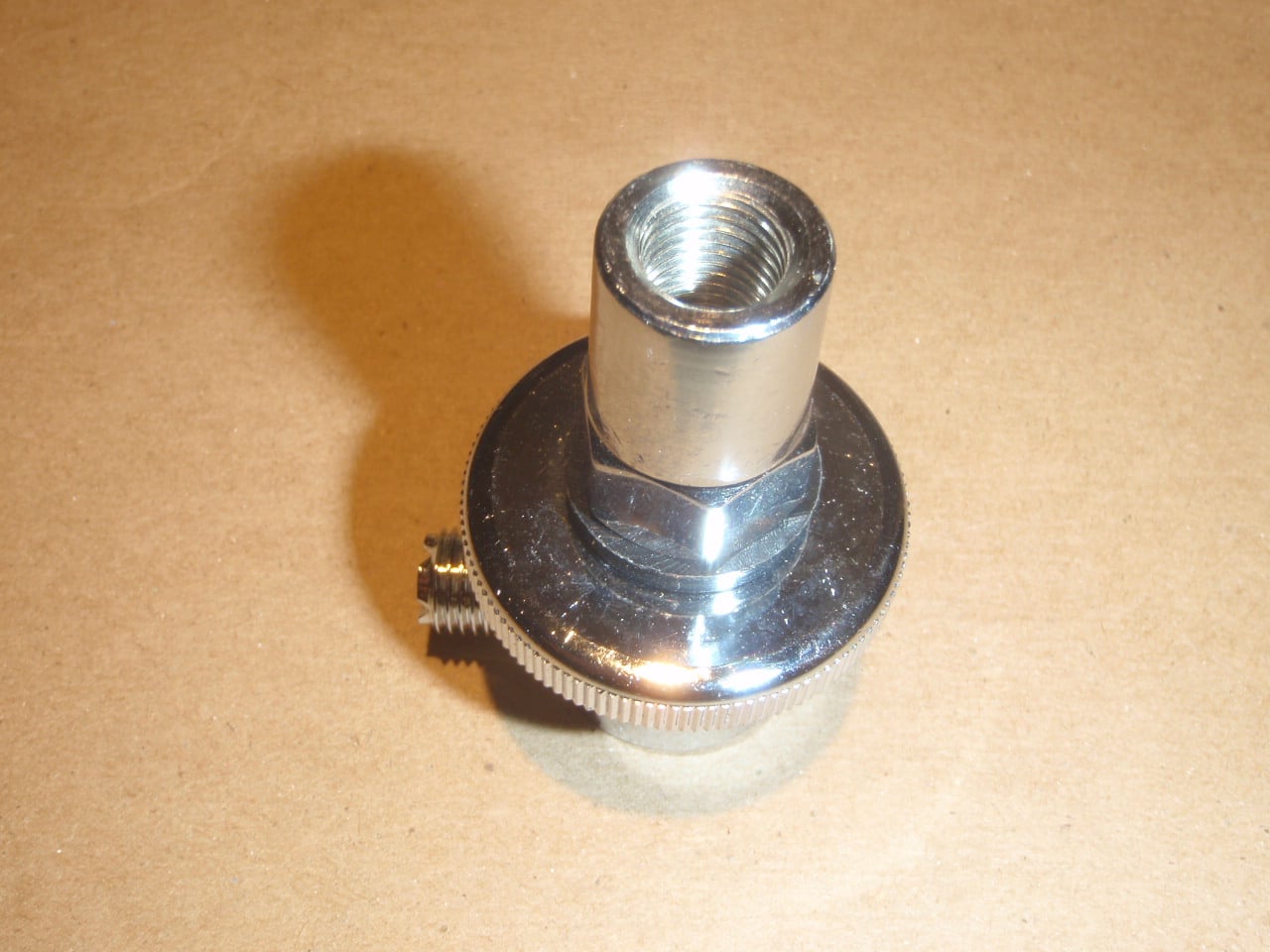
📡 Emergency Operations Matrix – Canada

B-001-011 Lesson Summary
| Concept | What It Means | Formula / Term | Why It Matters |
|---|---|---|---|
| Emergency Privileges | In real distress, operators may use any amateur frequency or power to send calls for help. | Distress Exemption | Allows lifesaving messages without concern for normal limits or interference. |
| Authorized Contacts | Normally, communication is limited to other amateur stations; non-amateur contacts are forbidden except in recognized emergencies. | Communication Scope | Keeps amateur activity within licensed services and prevents cross-service interference. |
| Emergency Activation | Special permissions apply only when normal systems are overloaded, damaged, or disrupted. | Disaster Trigger | Defines when hams may handle official or public-safety messages during crises. |
| Operator Limits | Each operator must stay within their certified frequency bands, even in emergencies. | Privilege Boundaries | Reinforces that emergency help never overrides licensing restrictions. |
| Non-Net Operators | Operators not involved in emergency nets must remain silent near net frequencies. | Silence Protocol | Prevents congestion and keeps channels clear for priority traffic. |
📋 Lesson Practice Exam ▼
📘 B-001-012 – Non-Remuneration, Privacy of Communications
Amateur radio is built on the principles of public service, shared learning, and mutual respect. That means the hobby is not to be used for personal profit or commercial gain. Likewise, operators are expected to uphold a high standard of privacy and integrity when it comes to the content they hear on the air.
In this section, you’ll learn about the rules surrounding compensation, message privacy, and when you’re allowed—or not allowed—to share the content of amateur transmissions.
💸 Can you get paid to relay messages or operate on the air?
The amateur bands are strictly non-commercial. Operators are not permitted to accept compensation for any activity that involves sending, receiving, or handling messages—even if it’s a favor or a third-party relay. That’s why No payment of any kind is allowed for third-party messages sent by amateur stations.
So, when is it ok to get paid?Never, it is expressly prohibited to demand or accept payment for exchanging messages. Whether it’s an emergency relay, a net check-in, or a DX report, your time on the air is always volunteer-based.
B-001-012-001, B-001-012-003
🔒 When can you share what you hear on the air?
Amateur radio operates on open frequencies, but that doesn’t mean everything you hear can be repeated. Operators must use discretion when discussing on-air content. You may only share what you hear if it was transmitted by an amateur radio station. This is because amateur radio is a public, non-confidential service, where exchanges between licensed amateurs are considered open communications by design.
However, there are clear legal limits. It becomes an offence to disclose private or non-broadcast transmissions when it is for the purpose of answering questions from a media organization. Even if a journalist asks about what was said on the air, you cannot share the content unless it was broadcast or officially authorized. Practicing discretion protects operators, preserves trust, and upholds the integrity of the amateur service.
B-001-012-002, B-001-012-004
B-001-012 Lesson Summary
| Concept | What It Means | Formula / Term | Why It Matters |
|---|---|---|---|
| Non-Commercial Operation | Amateur radio is strictly voluntary and may not be used for paid work or business gain. | Volunteer-Only Rule | Keeps the service focused on learning, experimentation, and community—not profit. |
| Payment for Messages | Operators cannot demand or accept money or reward for sending or relaying any message. | No-Compensation Policy | Maintains fairness and prevents the hobby from becoming a commercial service. |
| Sharing On-Air Content | You may discuss or repeat only what was transmitted by amateur stations in open communication. | Open-Frequency Standard | Respects the public nature of amateur exchanges while protecting personal privacy. |
| Media Disclosure | It is an offence to share private or non-broadcast transmissions for news or media purposes. | Privacy Regulation | Protects trust between operators and prevents misuse of information heard on the air. |
| Ethical Conduct | Operators are expected to act with honesty, respect, and discretion in all communications. | Operator Integrity | Upholds the reputation of amateur radio as a respectful, community-driven service. |
📋 Lesson Practice Exam ▼
📘 B-001-013 – Station Identification, Call Signs, Prefixes
Every amateur radio station must be clearly identified on the air. Your call sign is your legal signature and primary way to signal who you are, where you’re transmitting from, and that you’re operating within the rules. Canada has specific regulations about when, how, and in what language you identify your station.
This lesson covers the essential points about call signs, transmission intervals, and station identification rules—including how often to identify, which prefixes are Canadian, and the one exception when identification is not required.
🧾 What is a valid Canadian amateur call sign—and when must it be used?
A call sign not only identifies you legally, but it must also follow format conventions. In Canada, valid call signs typically begin with VA, VE, VO or VY. A good example would be VA3RAC, which follows both prefix and region assignment guidelines.
You must announce your call sign at the beginning and at the end of each contact, and repeat it at least every thirty minutes during longer exchanges. This timing ensures that anyone listening can confirm who is transmitting. The rules are the same for a test or a radio contact.
B-001-013-001, B-001-013-002, B-001-013-003, B-001-013-010, B-001-013-011
🗣️ When are call signs required during QSOs?
When two amateurs begin a QSO, Each station must transmit its own call sign. This confirms each operator’s identity before communications proceed. The same rule applies at the end of a contact: Each station must transmit its own call sign again to properly close the exchange.
Additionally, no station may transmit for longer than 30 minutes without identifying. This helps ensure ongoing accountability, especially during long nets or contests.
B-001-013-004, B-001-013-005, B-001-013-006
🔊 Are there any exceptions to identifying?
There is only one scenario in which you may transmit without identifying your station: Only to control a model craft. This exemption allows for control signals to be sent without repeatedly stating the call sign, which would be impractical for rapid telemetry or directional control.
For all other transmissions—including brief tests, pings, or tuning—you must still identify As The rules are the same for a test or a radio contact.
B-001-013-007, B-001-013-010
🌐 What language must be used when identifying?
When transmitting your call sign, you must use either of Canada’s two official languages. Identification is legal only in English or French. Using phonetics, abbreviations, or non-standard language doesn’t replace the requirement to use recognized, clearly spoken language when announcing your call sign.
This helps all listeners understand who is transmitting and ensures your signal is clearly traceable.
B-001-013-008
B-001-013 Lesson Summary
| Concept | What It Means | Formula / Term | Why It Matters |
|---|---|---|---|
| Canadian Call Sign Format | Valid call signs begin with VA, VE, VO or VY and identify the operator’s region and licence. | Canadian Prefixes | Creates a unique national identity and ensures traceability of every signal on the air. |
| Identification Timing | State your call sign at the start and end of each contact, and at least once every 30 minutes. | 30-Minute Rule | Provides clear accountability and helps others confirm who is transmitting. |
| Call Signs in QSOs | Each station must transmit its own call sign at both the beginning and end of a QSO. | Identification Cycle | Keeps exchanges organized and avoids confusion during multi-station activity. |
| Identification Exception | Identification is not required only when sending control signals to model craft. | Model Control Exemption | Allows short, rapid control transmissions without repeating call signs unnecessarily. |
| Language Requirement | Call signs must be spoken in either English or French using clear, standard pronunciation. | Official Languages Rule | Ensures identification is understandable nationwide and by international listeners. |
📋 Lesson Practice Exam ▼
📘 B-001-014 – Foreign Amateur Operation in Canada, Banned Countries, Third-Party Messages
International communication is one of the most rewarding aspects of amateur radio. But when operators cross borders—whether physically or over the airwaves—specific rules apply. Canada has agreements in place with many countries to allow visiting operators limited use of the airwaves, while also protecting the integrity of domestic operations. Equally important are the rules around third-party messages and which countries can or cannot participate in message exchanges.
This lesson covers what happens when foreign operators transmit in Canada, how third-party messages are handled, and which protocols are in place for global emergencies and disasters. It also explains when and how a Canadian amateur can legally communicate on behalf of someone else.
🛰️ Who can operate in Canada—and under what conditions?
The CEPT Agreement (Recommendation T/R 61-01) enables amateur radio operators from participating countries to operate in each other’s territories without obtaining additional licenses, provided they hold the appropriate qualifications. In Canada, this agreement is recognized by Innovation, Science and Economic Development Canada (ISED), allowing visiting European amateurs with CEPT licenses to operate with Advanced privileges. Conversely, Canadian amateurs with both Basic and Advanced qualifications can apply for a CEPT permit through Radio Amateurs of Canada (RAC) to operate in CEPT member countries.
Therefore, foreign amateur radio operators may transmit from Canadian soil, but only if Their country has an agreement with Canada and the amateur radio operator has obtained the appropriate permit. The CEPT agreement is one such path, allowing European hams to transmit with Advanced privileges while visiting Canada, as authorized by Innovation, Science and Economic Development Canada.
If a U.S. operator is on air in Canada, they must properly identify themselves. This includes stating Location by city and province at least once per contact, and, when using voice, also giving The Canadian call sign prefix for the geographic location of the station. These identifiers ensure that transmissions are legal and traceable within the Canadian regulatory framework.
B-001-014-002, B-001-014-005, B-001-014-009, B-001-014-010
📨 What about third-party communications?
Canada permits third-party message handling under specific circumstances. Operators may send a message on behalf of another person because Canada does not prohibit international communications on behalf of third parties. However,Only communications of a personal and non-commercial nature are allowed.
Even in emergencies, certain limits apply. International third-party communications during disasters are generally allowed, except when specifically prohibited by the foreign administration concerned. For example, if the destination country has opted out through the ITU, those communications must not occur. In some cases, The country has filed an objection to such communications with the International Telecommunication Union (ITU) restricting third-party communications.
B-001-014-003, B-001-014-004, B-001-014-006, B-001-014-007
🧑🤝🧑 Who is a third party—and what happens in shared transmissions?
It’s important to know who qualifies as a third party. For example, if Both non-certified persons (such as a Canadian friend and a visiting operator’s friend) are engaged in communication using your station, both are considered third parties—and communication is not permitted unless regulations allow it.
If your certified friend is operating your station and a foreign station breaks in to address the unlicensed party, your job is to Continue monitoring the communications of your friend. You cannot allow unlicensed persons to handle transmissions independently.
Canadian stations can exchange third-party messages with any other amateur radio station—but only within the boundaries of the regulations already discussed.
B-001-014-001, B-001-014-008, B-001-014-011
B-001-014 Lesson Summary
| Concept | What It Means | Formula / Term | Why It Matters |
|---|---|---|---|
| Reciprocal Operating Privileges | Foreign amateurs may operate in Canada only if their country has a formal agreement or CEPT recognition with ISED. | CEPT T/R 61-01 Agreement | Allows qualified visitors to operate temporarily while maintaining full traceability and legal compliance. |
| Canadian Prefix Use | Visiting operators must identify with both their call sign and the Canadian prefix for the province of operation. | Call Sign Identification Rule | Shows location clearly and ensures transmissions meet Canadian identification standards. |
| Canadian CEPT Privilege | Canadian operators with Basic + Advanced qualifications may obtain a CEPT permit through RAC to operate abroad. | Reciprocal Permit | Provides international access while maintaining regulatory parity among CEPT nations. |
| Third-Party Message Policy | Canada allows third-party messages if they are personal, non-commercial, and the other country does not prohibit them. | Non-Commercial Traffic | Supports international goodwill while respecting ITU and national restrictions. |
| Prohibited Countries | Third-party communication is banned with nations that have filed ITU objections to such traffic. | ITU Objection List | Prevents illegal or unauthorized message exchange with restricted jurisdictions. |
| Definition of Third Party | A non-licensed person communicating through an amateur station counts as a third party and must follow all regulatory limits. | Third-Party Definition | Clarifies who can speak on the air and under what supervision to maintain control and accountability. |
📋 Lesson Practice Exam ▼
📘 B-001-015 – Frequency Bands and Qualification Requirements
In amateur radio, knowing which bands you can operate on—and under what qualifications—is essential for both compliance and effective operation. Frequency privileges in Canada are linked directly to the certification level you hold, and extra rules apply for operating below 30 MHz. Additionally, frequency ranges for specific HF bands must be memorized, especially for exam readiness and on-air operation.
This lesson will help you understand the link between exam performance and band access, the limits of control operator authority, and the specific band allocations across popular HF bands. You’ll also learn where you’re permitted to control model craft under Canadian regulations.
🪪 Operating Privileges and Certification
In amateur radio, it doesn’t matter who controls your equipment—it matters who holds the qualifications. If someone with more advanced certification operates your station using your callsign they’re still limited to only the privileges allowed by your qualifications. This ensures that certification levels are respected regardless of who is in control.
The same is true in reverse: if you are operating another person’s station and they have higher qualifications than you, you are still limited to Only the privileges allowed by your qualifications. The system is designed to keep operations consistent with the certification of the control operator, not the owner of the equipment.
B-001-015-001, B-001-015-002
📉 Accessing Bands Below 30 MHz
The lower-frequency amateur bands—below 30 MHz—are part of the coveted HF spectrum, and not everyone gets automatic access. Even after passing the Basic written examination, you must do more. Specifically, You must attain a mark of 80% on the Basic examination, or pass an Advanced or Morse code examination. These rules ensure operators on these bands have a higher level of training or experience.
Canadian amateurs who meet this standard can then operate across a wide range of bands, including some of the most popular international HF bands like 40 metres, 20 metres, and 10 metres.
B-001-015-003
🎮 Radio-Controlled Models
The operation of model aircraft, boats, or cars using amateur radio frequencies is strictly controlled. The rule is simple and straightforward: a licensed amateur may only use bands on all amateur radio bands above 30 MHz for this purpose. This ensures that model control operations stay within predictable, interference-safe regions of the spectrum.
This same frequency limit applies when determining which spectrum portions can legally support remote-control signals without overlapping with critical HF communication channels.
B-001-015-004, B-001-015-011
📡 Canadian HF Band Ranges
You’ll need to memorize the official frequency ranges of the major HF bands in Canada. Here’s a breakdown of the most common allocations:
- 160-metre band: 1.8 MHz to 2.0 MHz
- 80-metre band: 3.5 MHz to 4.0 MHz
- 40-metre band: 7. 0 MHz to 7.3 MHz
- 20-metre band: 14. 000 MHz to 14.350 MHz
- 15-metre band: 21.000 MHz to 21.450 MHz
- 10-metre band: 28.000 MHz to 29.700 MHz
These band edges are based on national regulations and international agreements and this knowledge is tested frequently in Basic Qualification exams.
B-001-015-005 to B-001-015-010
B-001-015 Lesson Summary
| Concept | What It Means | Formula / Term | Why It Matters |
|---|---|---|---|
| Operator Privilege Rule | Each operator may use only the privileges that match their own certification level, regardless of whose equipment is used. | Certification Control | Keeps operations consistent and ensures responsibility lies with the qualified control operator. |
| HF Band Access | To operate below 30 MHz, you must score at least 80% on the Basic exam or hold Advanced or Morse qualifications. | 80% Rule | Ensures HF operators have the skill and knowledge needed for complex communications. |
| Model Craft Operation | Radio-controlled models may be operated only on amateur bands above 30 MHz. | 30 MHz Limit | Keeps model control away from HF bands and prevents interference with long-distance communication. |
| Canadian HF Bands |
160 m – 1.8 to 2.0 MHz 80 m – 3.5 to 4.0 MHz 40 m – 7.0 to 7.3 MHz 20 m – 14.000 to 14.350 MHz 15 m – 21.000 to 21.450 MHz 10 m – 28.000 to 29.700 MHz |
HF Band Allocations | Defines key operating ranges for Canadian amateurs and forms part of Basic exam knowledge. |
| Qualification and Control | Privileges follow the control operator’s certification, not the equipment owner’s licence. | Control Operator Principle | Ensures consistent enforcement and prevents unqualified operation across stations. |
📋 Lesson Practice Exam ▼
📘 B-001-016 – Maximum Bandwidth by Frequency Bands
📡 Understanding Bandwidth Limits
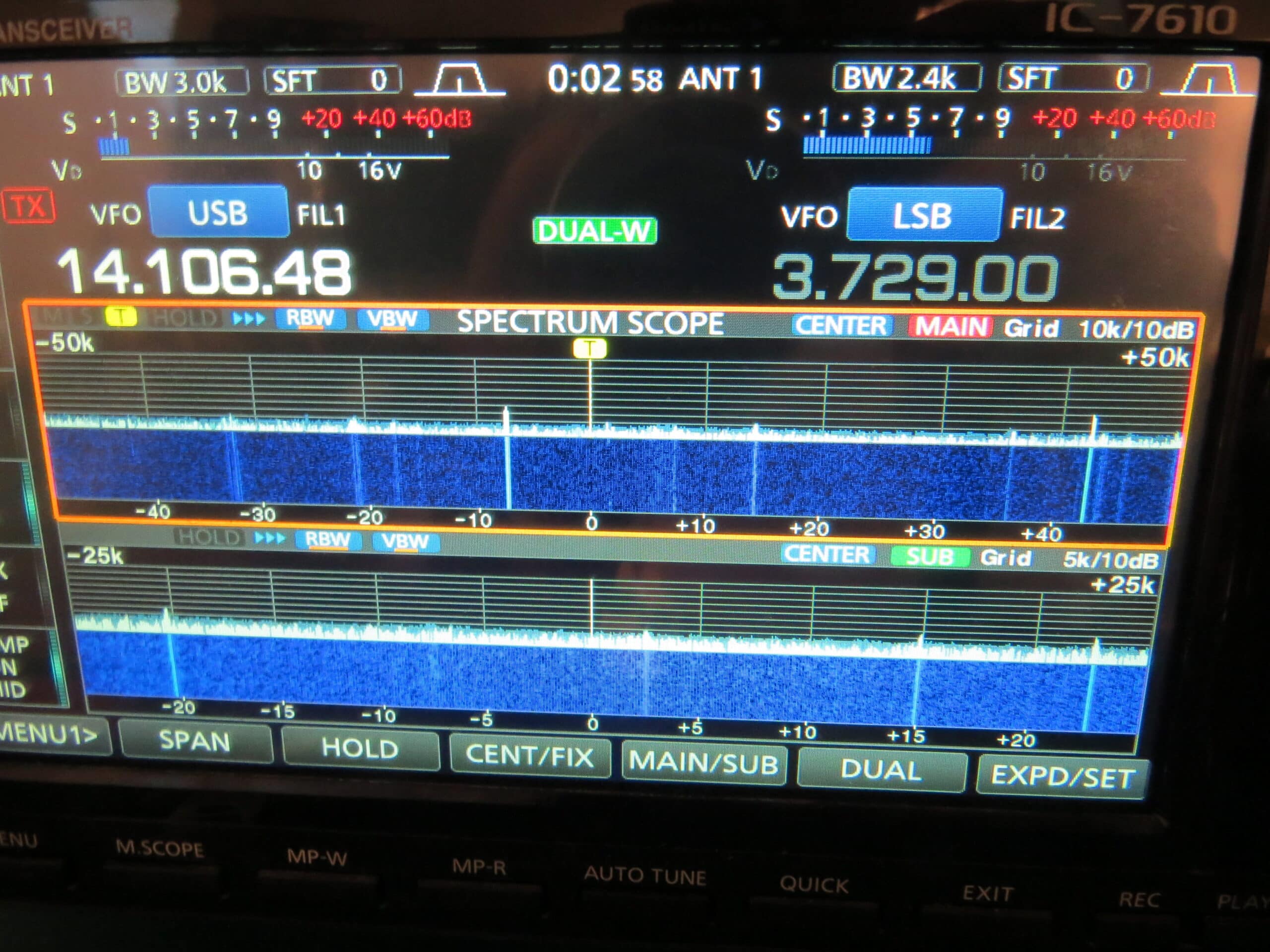
Bandwidth refers to the range of frequencies a radio signal occupies. In amateur radio, every transmission has a certain width depending on the mode and modulation being used—voice signals, for instance, use more bandwidth than Morse code. To avoid interference and ensure fair use of the radio spectrum, there are regulatory limits on the bandwidth of signals in specific frequency bands.
Understanding bandwidth restrictions is essential for operating legally and responsibly as a Canadian amateur radio operator. These rules not only maintain orderly use of the spectrum but also prevent one operator from unintentionally (or intentionally) interfering with another. Each amateur band has specific limits set out by Innovation, Science and Economic Development Canada (ISED), and exceeding these could result in unwanted interference or even penalties.
⚙️ Standard Limits Across the Bands
On some bands operators have more room to work with. For instance, the maximum authorized bandwidth on the 2-metre bands is 30 kHz, which accommodates FM voice transmissions and other wideband modes. The same bandwidth limit applies to the 50–54 MHz range, where 30 kHz is also allowed. These wider bandwidths make these bands suitable for high-fidelity voice or even digital operations.
On HF, however, the restrictions are tighter to conserve space for more operators. In the 28–29.7 MHz portion of the 10-metre band, the maximum transmission bandwidth drops to 20 kHz. Even more restrictive are bands between 7 MHz and 25 MHz—except for one special exception—where the maximum bandwidth is 6 kHz. These narrow limits are in place to prevent congestion and overlap between different stations and modes.
B-001-016-001 to B-001-016-005
🚫 Where Certain Modes Are Not Allowed
The 30-metre band, from 10.100 MHz to 10.150 MHz, is unique among HF bands. Due to its narrow slice of spectrum and its international shared use, it comes with both a bandwidth cap and a mode restriction. Here, the bandwidth must be less than 6 kHz, and single sideband (SSB) is not allowed. on 10.100 MHz to 10.150 MHz This band is reserved primarily for digital and CW operations, making it unsuitable for wideband voice modes.
Other combinations are prohibited because they don’t match the technical or regulatory purposes of the band. For example, using fast-scan television (ATV) on 145 MHz is not permitted, as this VHF segment is generally allocated for voice, digital, or repeater activity. Similarly, fast-scan television (ATV) on 14.23 MHz is also prohibited, since ATV modes require much more bandwidth than is allowed on HF.
B-001-016-006, B-001-016-007, B-001-016-009, B-001-016-010
🛑 Operating Near Band Edges
A critical skill for any ham is knowing where your signal begins and ends—especially near band edges. Each mode occupies space both above and below its center frequency. That means a signal placed too close to the edge of an amateur band may spill into adjacent non-amateur frequencies, potentially causing unintentional interference. To avoid this, operators must ensure that the entire occupied bandwidth falls within the amateur radio band.
This is especially important when using modes like SSB or digital, which can spread wider than expected. An operator transmitting SSB near the edge of a band may not realize that the upper or lower portion of their signal has crept out of bounds. Careful frequency selection—and sometimes switching to narrower modes like CW—can help avoid violations and maintain good amateur practice.
B-001-016-008
B-001-016 Lesson Summary
| Concept | What It Means | Formula / Term | Why It Matters |
|---|---|---|---|
| Definition of Bandwidth | Bandwidth is the range of frequencies a signal occupies; it varies by mode and affects how much spectrum is used. | Signal Width | Helps operators manage spectrum efficiently and avoid overlap with other users. |
| VHF and UHF Limits | On 50–54 MHz and 144–148 MHz bands, the maximum bandwidth allowed is 30 kHz. | 30 kHz Maximum | Allows FM and digital voice while keeping operations within regulated limits. |
| HF Band Restrictions | Between 7 MHz and 25 MHz, the maximum permitted bandwidth is 6 kHz, except for the 10-metre band which allows 20 kHz. | 6–20 kHz Range | Conserves space for multiple users and maintains clean HF operation. |
| 30-Metre Band Exception | From 10.100 to 10.150 MHz, bandwidth must be under 6 kHz, and SSB voice operation is not allowed. | Digital/CW Only | Protects shared spectrum and promotes narrowband modes for international use. |
| Prohibited Mode Use | Fast-scan television (ATV) is not permitted on 14.23 MHz or 145 MHz due to excessive bandwidth needs. | ATV Restrictions | Prevents interference on bands intended for voice, digital, and repeater operation. |
| Operating Near Band Edges | Operators must ensure the entire signal bandwidth stays within the authorized amateur band limits. | Band Edge Rule | Avoids accidental interference with adjacent services and keeps transmissions legal. |
📋 Lesson Practice Exam ▼
📘 B-001-017 – Restrictions on Capacity and Power Output by Qualifications
Transmitting power is one of the most closely regulated aspects of amateur radio. Power limits are enforced to reduce interference with other services and to promote efficient, responsible operation. Canadian amateur operators must understand how their level of qualification affects the power they are permitted to use—and how those limits vary depending on frequency, emission type, and operating mode.
This lesson explores the distinctions between Basic and Advanced privileges, explains how different power metrics (like PEP, ERP, DC input, and EIRP) are applied, and highlights where to verify compliance. By understanding these limits, operators can transmit confidently while staying within the legal and technical framework set by Innovation, Science and Economic Development Canada (ISED).
📡 Know Your Limits: The Power Guideline for All Operators
Regardless of qualification, Canadian amateurs are expected to operate with restraint. The universal rule is simple: use the minimumlegal legal power necessary to communicate. This principle minimizes interference, reduces RF exposure, and keeps stations efficient.
Even when higher power is authorized, the best practice is to aim for reliable contact with the least possible output. Low power doesn’t mean weak signal—it means skillful, efficient operating.
B-001-017-001
📡 Peak Envelope Power (PEP): Maximums Based on Qualification and Frequency
For many operators, HF single sideband (SSB) is a primary mode. The maximum PEP depends on both the operator’s qualification and the band in use. With Advanced certification, an amateur may run up to 2250 watts PEP on SSB across most HF bands.
For Basic with Morse or Basic with Honours, the maximum is much lower on certain frequencies. On 3750 kHz, the maximum is 560 watts PEP on 3750 kHz. Similarly, on 7055 kHz, the limit is 560 watts PEP on 7055 kHz. These caps ensure signals stay strong enough for communication but not excessive enough to interfere with other users.
B-001-017-002, B-001-017-004, B-001-017-005
📡 Effective Radiated and DC Power: Understanding What’s Measured
It’s not just about how much power your rig can produce—it’s where the measurement applies. Operators must confirm that transmitter output stays within the limit at the output of the transmitter or amplifier, not after antenna or feedline gain.
On 60 metres, the limit is expressed as ERP. Advanced operators may use up to 100 watts ERP, referenced to a half-wave dipole. On other HF bands, DC input power is also regulated. For Advanced, the maximum allowed is 1000 watts DC input power to the final RF stage. These rules account for differences in measurement standards while ensuring that output power remains safe and compliant.
B-001-017-003, B-001-017-006, B-001-017-007
📡 Basic Qualification? Mind the Lower Caps
Operators holding only the Basic certificate must follow lower limits. The maximum allowed is 250 watts DC input power to the transmitter’s final stage. In addition, when using emissions other than SSB—such as CW, AM, FM, or digital—the maximum is 190 watts carrier power. These rules limit continuous-duty signals, which can otherwise strain equipment or create interference issues.
B-001-017-009, B-001-017-010
📡 Special Considerations: LF and MF Bands
On the 630-metre and 2200-metre bands, antennas are much shorter than the wavelength, making them inefficient radiators. Because of this, regulators express power limits in equivalent isotropically radiated power (EIRP), which combines transmitter power with antenna performance. To remain within those limits, operators must account for antenna gain, since even small amounts of directional gain increase total radiated power.
When designing or tuning antennas on these low-frequency bands, it’s essential to calculate effective gain accurately to avoid exceeding authorized EIRP levels. Properly understanding this relationship allows operators to stay compliant while achieving the best possible signal from limited antenna systems.
B-001-017-008
B-001-017 Lesson Summary
| Concept | What It Means | Formula / Term | Why It Matters |
|---|---|---|---|
| Minimum Power Principle | Operators must always use the minimum power needed to communicate effectively. | Low-Power Guideline | Reduces interference and promotes efficient, responsible operation. |
| Advanced PEP Limits | Advanced operators may use up to 2250 watts PEP on HF single sideband (SSB). | 2250 W PEP Maximum | Provides strong, reliable communication while remaining within safe legal limits. |
| Basic with Honours / Morse | Basic with Honours or Morse operators are limited to 560 watts PEP on frequencies such as 3750 kHz or 7055 kHz. | 560 W PEP Limit | Ensures fairness and prevents excessive signal strength on crowded HF bands. |
| Effective Radiated Power | On 60 metres, Advanced operators may transmit up to 100 watts ERP referenced to a half-wave dipole. | ERP Limit | Standardizes measurement to control total output power effectively. |
| DC Input Power | For Advanced, the maximum DC input power to the final RF stage is 1000 watts; for Basic, it is 250 watts. | Input Power Cap | Defines transmitter limits directly and protects against overdriving amplifiers. |
| Carrier Power for Basic | Basic certificate holders are limited to 190 watts carrier power for AM, FM, CW, or digital modes. | 190 W Carrier Cap | Reduces continuous-duty stress on equipment and avoids unwanted interference. |
| Low-Frequency Power Rules | On 630 m and 2200 m bands, power is measured as EIRP, combining transmitter output and antenna gain. | EIRP Measurement | Accounts for antenna efficiency and prevents excessive radiation on LF and MF bands. |
📋 Lesson Practice Exam ▼
📘 B-001-018 – Unmodulated Carriers and Retransmission
In amateur radio, efficient use of spectrum and responsible signal handling are foundational principles. Retransmission and carrier testing are essential tools for extending coverage and ensuring proper equipment function, but they must be used in a controlled and legal manner. The rules governing these activities are especially important for operators with a Basic Qualification, who have specific frequency limits for repeater use and testing.
This lesson reviews what constitutes a repeater station, when unmodulated carriers are allowed, and which parts of the HF spectrum Basic holders can access for repeater communication. Understanding these points ensures every operator respects their privileges and avoids unintentional interference or regulatory violations.
📡 What Is a Repeater and What Does It Do?
A repeater station is one of the most valuable assets in amateur radio, enabling extended communication beyond line-of-sight. These automated stations receive a signal on one frequency and retransmit it on another, effectively boosting its range. According to Canadian regulations a repeater station is an amateur radio station that automatically retransmits the signals of other stations. This function is crucial in emergency communications and daily VHF/UHF operations.
Repeaters help operators in mobile or remote locations maintain contact with nets and communities. Because they operate without manual control, their configuration and use are tightly regulated to prevent interference and overuse. Proper identification, time-outs, and licensing considerations all apply.
B-001-018-001
📡 Using Unmodulated Carriers Legally
There are moments when an operator needs to test their transmitter without modulation—perhaps to check SWR, verify signal strength, or conduct antenna diagnostics. However, these carrier signals must not be used casually, and if a dummy load is not used, an unmodulated carrier may be transmitted only for brief tests on frequencies below 30 MHz.
Misuse of unmodulated carriers, such as transmitting for extended periods can disrupt communications and be interpreted as intentional interference. Always log or note your test activity and keep transmissions brief and necessary and identify your station Callsign prior to testing.
B-001-018-002
📡 Repeater Access for Basic Qualification Holders
Operators holding only the Basic Qualification must pay attention to band-specific restrictions, especially when accessing repeater outputs. HF repeater operation is permitted, but only on clearly defined frequencies. The lowest output frequency of repeaters that holders of a Basic Qualification are allowed to use is 29.500 MHz. This gives access to the 10-metre band under certain conditions.
The lowest output frequency band segment for repeaters accessible to Basic-only operators is 29.500 MHz to 29.700 MHz. This is a small but important slice of the radio spectrum, and operating outside of it with a Basic certification violates ISED regulations.
B-001-018-003, B-001-018-004
B-001-018 Lesson Summary
| Concept | What It Means | Formula / Term | Why It Matters |
|---|---|---|---|
| Repeater Definition | A repeater automatically receives and retransmits amateur signals on another frequency to extend range. | Automatic Retransmission | Supports long-distance and emergency communications while staying under regulation. |
| Unmodulated Carrier Use | Carriers may be transmitted briefly for equipment tests, preferably into a dummy load, and always identified. | Test Carrier Rule | Prevents interference and ensures the airwaves remain clear for active communication. |
| Testing Restrictions | When not using a dummy load, unmodulated carriers must be transmitted only for short tests below 30 MHz. | Brief Test Limit | Minimizes disruption and avoids confusion with deliberate interference. |
| Repeater Access for Basic Operators | Basic certificate holders may use HF repeaters only within 29.500 to 29.700 MHz on the 10-metre band. | 29.500–29.700 MHz Window | Defines the sole HF repeater range available to Basic operators under ISED rules. |
| Spectrum Responsibility | Repeaters and carrier tests must be used carefully to maintain fair and efficient spectrum use. | Efficient Spectrum Use | Ensures reliability, cooperation, and compliance across the amateur service. |
📋 Lesson Practice Exam ▼
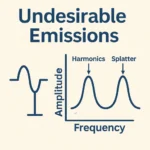
📘 B-001-019 – Amplitude Modulation, Frequency Stability, and Measurements
In amateur radio, transmitting a clean, stable signal isn’t just courteous—it’s required. Regulatory expectations are in place to ensure that emissions are accurate, intelligible, and free from distortion or drift. Whether you’re operating voice, CW, or digital modes, your equipment must meet minimum performance standards for modulation, frequency accuracy, and signal purity.
This lesson focuses on amplitude modulation and signal quality, especially the issue of overmodulation in voice transmissions. It also reviews key requirements around frequency stability and the basic measurements every station must be capable of performing. By understanding and ensuring these fundamentals are followed, you’ll maintain both regulatory compliance and technical respect on the bands.
📡 Stay Locked On: Frequency Stability Requirements
One of the cornerstones of clean operation is frequency stability. If your signal drifts—even slightly—it can cause interference, make contacts difficult, or even violate regulations. In Canada, frequency stability in the amateur radio service must be equivalent to crystal control below 148 MHz. This means modern transmitters should maintain excellent accuracy, particularly on VHF and lower frequencies.
This requirement protects spectrum users from drifting signals and ensures the frequency you intend to use is the one you’re actually transmitting on. Older analog gear may require more frequent retuning, but modern rigs with phase-locked loops (PLLs) or digital synthesis maintain crystal-like precision automatically.
B-001-019-001
📡 Preventing Overmodulation in SSB
In voice communication, one of the most common signal quality problems is overmodulation. When your modulation level is too high, it distorts the signal and causes splatter onto adjacent frequencies. For this reason, amateur radio stations are required to have means of indicating or preventing overmodulation. Keeping your mic gain and audio levels properly adjusted is essential.
Overmodulation is especially problematic on SSB, where there’s no carrier and only a single sideband is transmitted. Use of SSB requires that an amateur radio station have means to prevent or indicate overmodulation, such as ALC meters or modulation monitors. A clean signal not only improves communication—it shows professionalism on the air.
B-001-019-002, B-001-019-003
📡 Modulation Limits: How Much Is Too Much?
Voice transmissions must not only be free of distortion—they must also be controlled in amplitude. The maximum percentage of modulation permitted for amateur radio voice communications is 100%. Exceeding this level can result in distortion, bandwidth expansion, and unintentional interference with nearby stations.
This percentage cap applies to AM and other amplitude-modulated emissions. Modern transceivers often include built-in limiters and automatic gain control to help maintain compliance. Still, it’s the operator’s responsibility to ensure that modulation remains within regulated boundaries at all times.
B-001-019-004, B-001-019-006
📡 Required Station Capabilities: Measuring Frequency
Every amateur station must be capable of basic monitoring and self-assessment. Regardless of emission type, amateur radio stations must be capable of reliably measuring frequency. Whether through a built-in frequency display, external counter, or calibration method, operators must know exactly where their signal falls on the dial.
This requirement supports accurate logging, helps avoid QRM, and assists in operating within assigned band segments. Frequency counters and digital readouts are standard in most modern rigs, but older equipment may require calibration using known signals or harmonics.
B-001-019-005
B-001-019 Lesson Summary
| Concept | What It Means | Formula / Term | Why It Matters |
|---|---|---|---|
| Frequency Stability | Transmitters must hold frequency accuracy equal to crystal control below 148 MHz. | Crystal-Control Standard | Prevents drift, maintains signal clarity, and avoids interference on nearby channels. |
| Overmodulation Prevention | Stations must include a method to prevent or indicate overmodulation, such as ALC meters or modulation monitors. | Modulation Control | Stops signal distortion and keeps transmissions clean and intelligible. |
| Maximum Modulation | The modulation depth for voice transmissions must not exceed 100 percent. | 100 % Limit | Prevents splatter and bandwidth expansion that could disturb other operators. |
| Measurement Capability | All amateur stations must be able to measure operating frequency accurately. | Frequency Measurement Rule | Assures precise tuning, legal operation, and accurate contact logging. |
| Clean Signal Practice | Operators should regularly monitor audio, frequency, and output to maintain signal purity. | Signal Integrity | Demonstrates professionalism and preserves quality communication across all bands. |
📋 Lesson Practice Exam ▼
📘 B-001-020 – International Telecommunication Union (ITU) Radio Regulations, Applicability
Amateur radio isn’t just a national activity—it’s global. International communication plays a vital role in amateur operations, particularly during emergencies, contests, or long-distance DX work. But with global privileges come global responsibilities. Every Canadian amateur must understand how international regulations—particularly those issued by the International Telecommunication Union (ITU)—govern cross-border communication.
This lesson introduces the core ITU rules that apply to Canadian operators, explains the limits on what messages may be exchanged internationally, and clarifies how Morse code and national authority intersect within global guidelines.
📡 Message Types Allowed Across Borders
When contacting amateur stations in other countries, there are rules about the kinds of messages that can be exchanged. These are not casual conversations in the commercial sense—they must serve the goals of amateur radio. Specifically, messages related to the purposes of amateur radio or remarks of a personal nature are allowed. Anything that sounds like business, advertising, or political commentary is off-limits.
This guideline ensures that amateur radio remains a non-commercial service. It protects the integrity of the hobby and helps preserve frequency allocations for experimental, emergency, and educational purposes.
B-001-020-001
📡 Your Duty as an International Communicator
As an operator, you carry the responsibility of ensuring your messages stay within these boundaries. This isn’t just a guideline—it’s a rule. International communications are limited to the purposes of amateur radio or remarks of a personal nature, and the operator is accountable for keeping contacts compliant.
This means you must monitor not only your own transmissions, but also the nature of the conversation. If a contact begins to stray into inappropriate or commercial content, it’s up to you to steer it back or end the contact.
B-001-020-002
📡 Who Sets the Global Rules?
Canada’s amateur service is governed nationally by Innovation, Science and Economic Development Canada (ISED), but globally it’s shaped by the ITU. The International Telecommunication Union establishes the regulations that Canadian operators must follow when communicating internationally.
These rules form the basis for reciprocal agreements and licensing policies worldwide. International communications are permitted unless an administration has registered an objection. This means that unless a specific country has formally prohibited amateur exchanges with Canada, you’re free to make contact under ITU provisions.
B-001-020-003, B-001-020-005
📡 What About Morse Code?
In the past, proficiency of Morse code was a mandatory part of earning an amateur license for international operation. That has changed. According to ITU rules, administrations determine if proficiency in Morse code is a requirement for authorization. In Canada, Morse is optional for most license levels, but still opens additional privileges (like HF operation for Basic + Morse).
This rule provides flexibility for national authorities while reflecting changes in modern radio usage. Operators who want to use CW are still encouraged to learn it, but it is no longer a global mandate.
B-001-020-004
B-001-020 Lesson Summary
| Concept | What It Means | Formula / Term | Why It Matters |
|---|---|---|---|
| Allowed Message Types | Only messages related to amateur radio activities or personal remarks may be sent internationally. | Personal / Amateur Content | Prevents commercial or political use of amateur frequencies across borders. |
| Operator Responsibility | You are responsible for ensuring all international contacts stay within ITU rules and Canadian regulations. | Operator Accountability | Maintains the integrity of amateur radio and avoids regulatory violations. |
| ITU’s Role | The International Telecommunication Union sets global regulations governing cross-border amateur radio activity. | Global Radio Framework | Ensures coordination between nations and defines international communication standards. |
| Reciprocal Operation | International operation is permitted unless a country has filed an objection under ITU agreements. | Reciprocity Rule | Supports global cooperation while respecting national sovereignty in licensing. |
| Morse Code Requirement | Morse proficiency is no longer mandatory under ITU rules; each country sets its own policy. | National Discretion | Gives Canada flexibility while allowing operators to earn additional privileges through Morse. |
📋 Lesson Practice Exam ▼
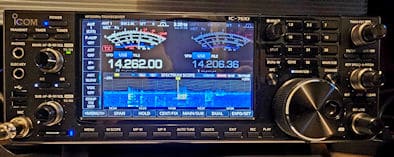
📘 B-001-021 – Operation Outside Canada, ITU Regions, Reciprocal Privileges, International Licences
Amateur radio is a global service, and many Canadian operators take their passion across borders. Whether you’re travelling within North America or across the globe, it’s important to understand how international regulations apply. From ITU region definitions to reciprocal licensing agreements, this section equips you to operate legally and confidently while abroad.
Knowing where Canada fits in the global framework—and what qualifications and procedures are required when operating in other countries—ensures smooth and compliant international communication. This lesson highlights key rules and operating practices every Canadian amateur should know before taking their station on the road.
📡 Canada’s Place in the Global Grid
The world is divided into three International Telecommunication Union (ITU) regions, each with unique band plans and spectrum allocations. Canada is located in Region 2, along with the rest of the Americas. This classification determines your default frequency privileges and helps define reciprocal access abroad.
Other parts of the world fall into different regions. Europe and Africa are located in Region 1, while Australia, Japan, and Southeast Asia are located in Region 3. Knowing your region helps in understanding propagation patterns, contests, and international license agreements.
B-001-021-001, B-001-021-004, B-001-021-005
📡 Operating in the United States and Offshore
If you’re a Canadian amateur visiting the United States, your operating privileges match those of U.S. amateurs—not Canadian rules. A Canadian amateur radio operator, operating their station in the state of Florida, is subject to those applicable to United States amateur radio operators. The same applies even if you’re offshore. A Canadian amateur radio operator, operating their station 7 kilometres offshore from the coast of Florida, is subject to those applicable to United States amateur radio operators.
These reciprocal agreements make it easy for qualified Canadian hams to operate in the U.S., provided they follow the band limits and rules of their host country.
B-001-021-002, B-001-021-003
📡 CEPT and International Travel
Europe and many other countries recognize CEPT—the European Conference of Postal and Telecommunications Administrations—as a standard for reciprocal amateur licensing. A CEPT Amateur Radio Permit allows a qualified Canadian amateur radio operator to operate while visiting any participating country, but this only applies to those who hold the Advanced qualification.
When operating under CEPT, you must identify properly. Operators must transmit the visited country’s prefix, followed by “stroke,” followed by their Canadian call sign. This allows other operators and regulators to know you’re operating under foreign authorization.
B-001-021-006, B-001-021-007
📡 Using Your Call Sign in the United States
When operating in the U.S., correct station identification is essential. Canadian amateurs with a Basic Qualification may operate and are required to transmit their Canadian call sign, followed by “portable” or “mobile” as appropriate, followed by the prefix for the US call area being visited. This format ensures you’re identified both as a Canadian licensee and as being within a particular U.S. region.
This practice also helps avoid confusion in contests and logs, particularly with stations working DXCC awards or region-based nets. Make sure your ID is clear, accurate, and consistent with U.S. regulations.
B-001-021-008, B-001-021-009
B-001-021 Lesson Summary
| Concept | What It Means | Formula / Term | Why It Matters |
|---|---|---|---|
| Global ITU Regions | The world is divided into three ITU regions; Canada is in Region 2, along with the rest of the Americas. | ITU Region 2 | Defines operating bands, contest regions, and international frequency coordination. |
| Operating in the United States | Canadian amateurs may operate in the U.S. under reciprocal privileges but must follow U.S. amateur regulations. | Reciprocal Agreement (U.S.) | Allows easy cross-border operation while ensuring compliance with host-country rules. |
| Offshore Operation | When operating offshore within U.S. waters, Canadian operators are still subject to U.S. amateur service regulations. | U.S. Offshore Rule | Clarifies that jurisdiction depends on location, not nationality, while operating abroad. |
| CEPT Licence Privileges | Advanced Canadian operators may operate in CEPT member countries using a CEPT Amateur Radio Licence. | CEPT Recognition | Grants international access and ensures compliance under shared European agreements. |
| International Call Sign Format | When operating abroad, you must include the visited country’s prefix before your Canadian call sign (e.g., F/VE7DXE). | Portable Identification | Provides clarity and legal identification for all foreign operations. |
| U.S. Identification Format | In the U.S., transmit your Canadian call sign followed by “portable” or “mobile” and the local U.S. call area prefix. | Example: VE7DXE/mobile W4 | Prevents confusion in logging and ensures recognition by U.S. stations and regulators. |
📋 Lesson Practice Exam ▼
 📘 B-001-022 – Examinations – Department’s Fees, Delegated Examinations, Fees, Disabled Accommodation
Understanding how amateur radio exams are administered in Canada helps reduce confusion and prepares candidates for a smooth certification process. Knowing where fees apply—and where they don’t—can also help new hams navigate the system without unexpected surprises. From federally administered exams to volunteer examiners, and from special accommodations for disabled applicants to fee recovery policies, this section covers it all.
Whether you’re taking your first Basic exam or preparing for Morse code or Advanced, it’s important to understand who can examine you, what qualifications they must hold, and the fees involved.
📡 Who Gives the Exams and What Are Their Qualifications?
In Canada, most amateur radio exams are administered by accredited volunteer examiners who are certified by ISED. These individuals aren’t just volunteers—they’re experienced hams who must meet certification criteria. To be accredited, an examiner must hold an Amateur Radio Operator Certificate with Basic, Advanced, and Morse code qualifications. This ensures they can administer any of the certification levels with confidence and technical accuracy.
These examiners may offer the exam at hamfests, club meetings, or in one-on-one sessions. Their role is essential in supporting the growth of the hobby across the country, particularly in remote or rural communities where ISED offices may not be nearby.
📡 Department-Administered Exams and Public Policy
The fee for taking an examination for an Amateur Radio Operator Certificate at an Innovation, Science and Economic Development Canada office is $0. In other words, there is no charge for qualification examinations conducted by ISED. This policy reflects the government’s goal to promote accessibility and encourage participation in the amateur service.
(Covers: B-001-022-001 B-001-022-004)
📡 What Can Accredited Examiners Charge?
While exams at ISED offices are free, that’s not always the case with exams administered by volunteers – the examiner may charge a fee to recover costs when administering an examination.
The amount charged may vary, but it must reflect actual expenses and not be used for profit. Most volunteer examiners are transparent about these fees, and many even waive them for students or first-time applicants. Always check with your examiner ahead of time to understand what costs might be involved.
(Covers: B-001-022-003)
📡 Fair Access for Disabled Candidates
The amateur radio certification process is inclusive and supports candidates with disabilities. Depending on the individual’s needs, exams can be delivered orally, with extra time, or in alternate formats. Some candidates may recite Morse code sounds instead of using a key. However, it is incorrect to assume a disability grants an automatic exemption from parts of the exam. Therefore, ‘a disabled candidate may be exempted from portions of an Amateur Radio Operator Certificate examination’ is not an accurate statement under current ISED policy.
Instead, accommodations are provided to ensure fair opportunity—not exemption. These supports ensure that all candidates demonstrate required knowledge while still respecting their specific needs or limitations.
(Covers: B-001-022-002)
📡 Exam Language and Interpretation
Canada is officially bilingual, and amateur radio exams are available in both English and French. Some candidates assume that if they don’t speak either language well, they can use an interpreter of their choice during the exam. However, this is a misconception, and a candidate with insufficient knowledge of English or French may be accompanied by an interpreter is not correct and is not part of the official examination policy.
(Covers: B-001-022-005)
B-001-022 Lesson Summary
| Concept | What It Means | Formula / Term | Why It Matters |
|---|---|---|---|
| Accredited Examiners | Volunteer examiners certified by ISED hold Basic, Advanced, and Morse qualifications and may administer any exam. | Accredited Volunteer Examiner | Expands exam access across Canada, especially in rural or remote areas. |
| Department Exams | Exams taken at ISED offices are free; there is no fee for department-administered tests. | $0 Department Fee | Encourages participation and supports equal access to amateur radio certification. |
| Examiner Fees | Volunteer examiners may charge a small fee to recover costs when giving an exam. | Cost-Recovery Policy | Ensures fairness while allowing exam availability through the volunteer network. |
| Disability Accommodation | Disabled candidates receive accommodations such as oral exams or extended time, but no content exemptions. | Accessible Testing | Promotes inclusion while maintaining certification standards for all candidates. |
| Exam Language and Interpretation | Exams are available in English or French; private interpreters are not permitted for language translation. | Bilingual Policy | Ensures consistency and fairness in federally recognized exam delivery. |
📋 Lesson Practice Exam ▼
📘 B-001-023 – Antenna Structure Approval, Neighbour and Land-Use Authority Consultation
Erecting an antenna is one of the most exciting moments for any amateur radio operator. Whether it’s a simple vertical or a full-blown HF tower, the process involves more than choosing the right gear. What many new hams don’t realize is that antenna installations in Canada fall under specific rules designed to balance technical needs with community interests. This lesson walks through the federal and municipal approval landscape so you can install with confidence and respect.
Radio waves may not need permission to travel—but your tower just might. Knowing who makes the rules, how to handle consultation, and when public input is required helps you avoid misunderstandings. And with proper planning, you’ll be able to build the station of your dreams while staying on the right side of the law—and the neighbours.
📡 Respecting Boundaries and Responsibility
Some operators think they can put up any size antenna as long as it fits on their property. That’s a risky assumption. Regardless of personal intentions, you can’t ignore the processes that exist to protect shared environments. It’s incorrect to assume an amateur radio operator may erect any size antenna structure without consulting neighbours or the local land-use authority. In reality, both federal and local authorities play key roles in approving large or prominent antenna structures.
The ultimate responsibility for regulating these installations lies at the federal level. Oversight is not left to guesswork or loopholes. In fact, all antenna towers and mast installations fall under the jurisdiction of the Minister of Innovation, Science and Industry, who administers national standards that work in conjunction with local bylaws. Understanding this shared framework is the first step in responsible tower and antenna erection.
(Covers: B-001-023-001, B-001-023-002)
📡 When Local Input Doesn’t Exist
Not every municipality has a public consultation process specifically for antenna systems. That doesn’t mean you’re off the hook. If your local government hasn’t created a clear policy, you’re expected to follow the default public consultation process outlined by Innovation, Science and Economic Development Canada. This ensures your installation still undergoes fair review and consideration.
However, there are specific scenarios where consultation isn’t needed at all. These are known as exclusions, and they’re carefully defined in federal policy. You may skip the process entirely when an exclusion criterion defined by Innovation, Science and Economic Development Canada applies. This might include very short towers or temporary antennas, but always check the criteria before you assume you’re exempt.
(Covers: B-001-023-003, B-001-023-004)
📡 A Closer Look at Public Input
You might think public consultation means holding a community meeting or debate. Fortunately, that’s not how it works in amateur radio. Unlike development projects that require town halls, antenna consultation is usually much quieter and more efficient. That’s why participating in public meetings on the project is not part of the ISED process—it’s not required.
Instead, the focus is on written feedback. During the formal comment period, stakeholders have 30 days to submit concerns. As the proponent, your job is to respond to reasonable and relevant concerns provided in writing within the 30-day public comment period. This keeps the dialogue civil and grounded in facts rather than emotion or speculation.
(Covers: B-001-023-005, B-001-023-006)
📡 Navigating Local and Federal Roles
In areas where municipalities have their own rules for antenna systems, those rules must be followed unless exclusions apply. For instance, public consultation may not be necessary if the system is excluded by the municipal process OR the provisions of Client Procedures Circular CPC-2-0-03. This makes it easier to install antennas in zones that are pre-approved or covered by previous agreements.
Sometimes, even after the process is followed, a disagreement may remain—often with organizations like schools, first responders, or local service providers. When this happens, and no compromise can be found, the decision is made by Innovation, Science and Economic Development Canada. This final decision-making role ensures fairness when local conflict cannot be resolved.
(Covers: B-001-023-007, B-001-023-008)
📡 Thinking About Tower Height
A common question is how tall a structure can be before triggering consultation. There’s no single national height limit—it depends on local policies or the federal exemption list. In general, you’re safe from consultation if your tower is the tallest exempted by the land-use authority or Innovation, Science and Economic Development Canada. Always check the official guidance before installing anything close to those thresholds.
When municipalities do have consultation rules in place, the next step is understanding the process. Who controls the timeline? Who decides what’s required? In such cases, the municipality or local land-use authority determines how public consultation should take place. This local discretion ensures that community-specific needs are respected, from heritage zones to shared housing developments.
(Covers: B-001-023-009, B-001-023-010)
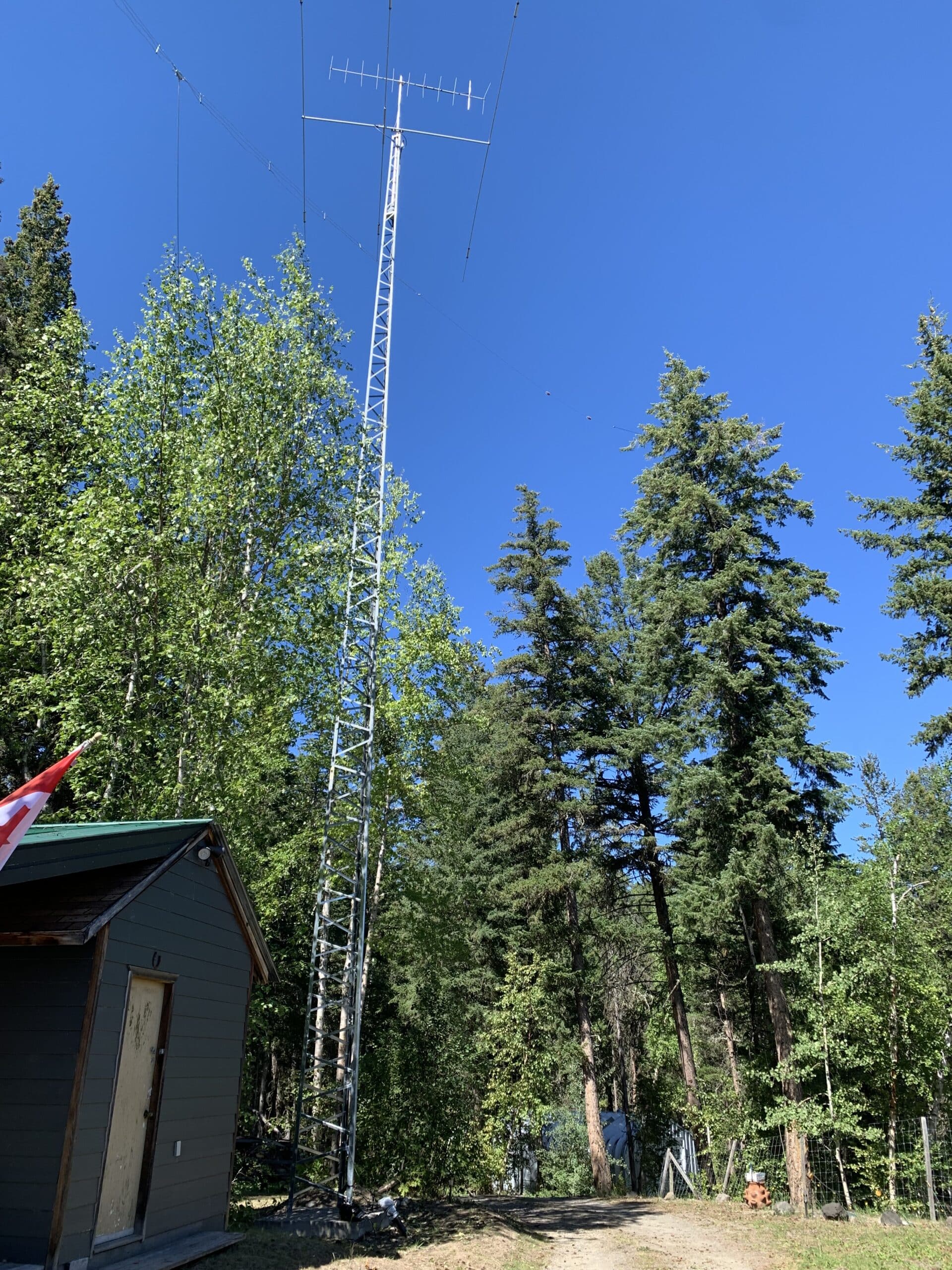

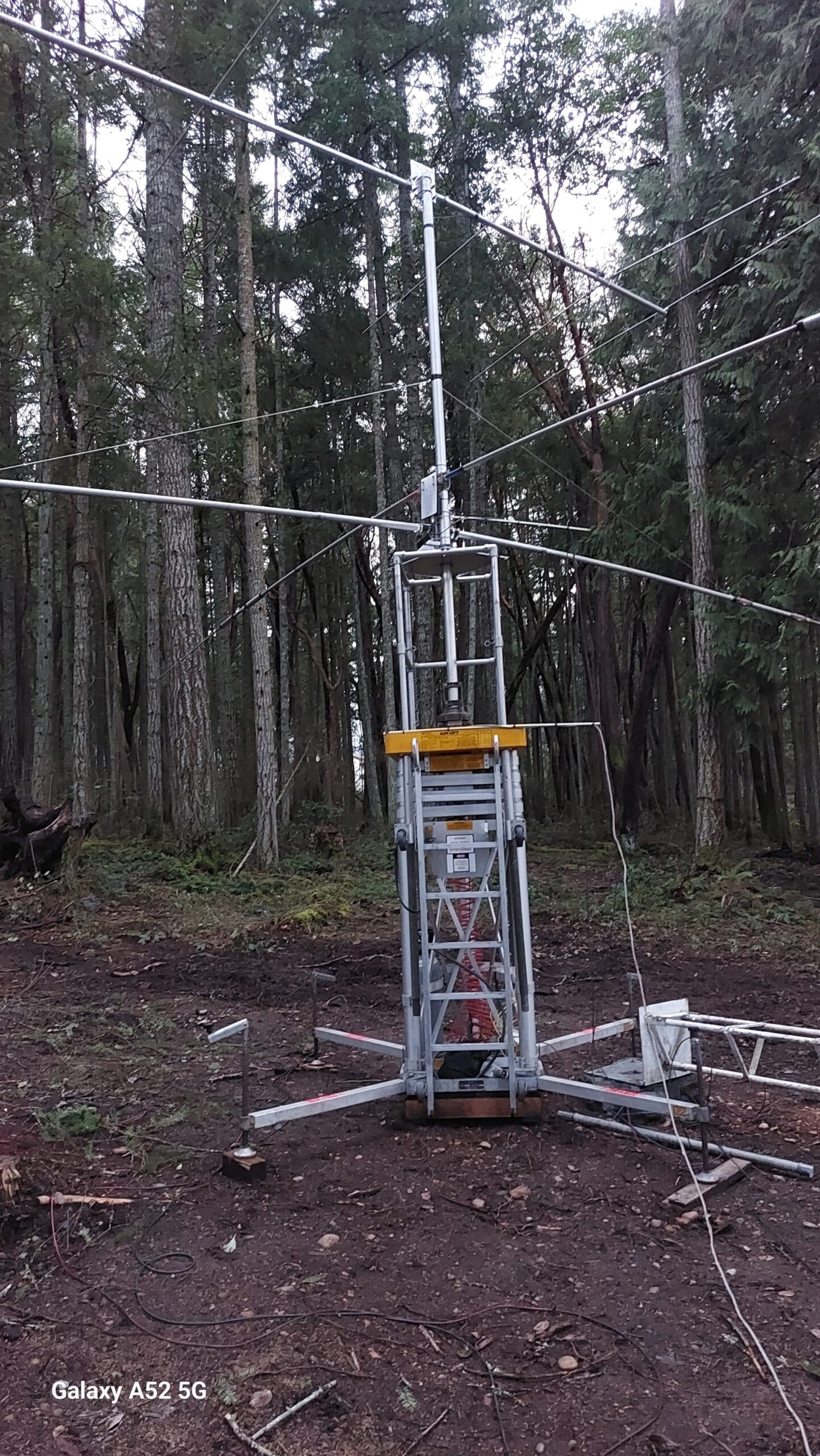
B-001-023 Lesson Summary
| Concept | What It Means | Formula / Term | Why It Matters |
|---|---|---|---|
| Shared Oversight | Antenna systems are regulated federally by ISED and locally by land-use authorities. | Federal & Municipal Roles | Ensures installations balance technical needs with community standards. |
| Neighbour Consultation | Operators must consult neighbours or local authorities when structures require approval; unlimited size is not permitted. | Consultation Requirement | Promotes transparency and reduces local disputes about new towers. |
| When No Local Process Exists | If a municipality lacks its own policy, the ISED default public-consultation procedure applies. | Default ISED Process | Guarantees fair review even where local bylaws are absent. |
| Exclusions from Consultation | Certain small or temporary installations may qualify for exemption under ISED criteria. | Exclusion Criteria | Simplifies approval for minimal-impact or short-term antennas. |
| Public Feedback Process | Consultation occurs through written comments within a 30-day period—not public meetings. | 30-Day Comment Period | Keeps communication factual and efficient for all stakeholders. |
| Conflict Resolution | If disputes remain unresolved after consultation, ISED makes the final decision. | Final Authority: ISED | Provides national consistency and prevents deadlock at the local level. |
| Height and Local Control | Tower height thresholds vary; municipalities decide the process unless exclusions apply under CPC-2-0-03. | Height Threshold Rule | Ensures that visual and safety impacts are handled through local discretion. |
📋 Lesson Practice Exam ▼
📘 B-001-024 – Radio Frequency Electromagnetic Field Safety
The safe operation of an amateur radio station is not only about excellent technical performance—it also requires a thorough understanding of the electromagnetic environment. In today’s world, where radio frequency (RF) energy is all around us, ensuring that our stations do not exceed safe exposure limits is essential. This lesson examines the key elements of RF safety as outlined in Safety Code 6, a fundamental standard that helps protect human health while allowing effective communication.
Every operator must learn not only how to optimize their equipment but also how to maintain safe exposure levels. Safety Code 6 is the benchmark for determining how much RF energy can be safely present around the human body. By studying its provisions, you’ll gain the confidence to set up your station in a way that is both compliant and safe, ensuring that all transmissions remain within acceptable limits.
📡 RF Safety Foundations and Regulatory Oversight
The first step in mastering RF safety is understanding who sets the rules. In Canada, the organization responsible for publishing the guidelines that protect us from RF energy is Health Canada. Health Canada’s standards are designed to help everyone—from amateur radio operators to industrial transmitters—limit exposure and avoid potential health risks. These guidelines serve as the foundation on which all RF exposure evaluations are based.
Complementing this, Safety Code 6 plays a pivotal role. Its purpose is straightforward: It gives RF exposure limits for the human body. These limits are set to ensure that regardless of your station’s output or design, there is a clear threshold above which exposure becomes a concern. In this way, Safety Code 6 provides the regulatory backbone for maintaining a safe operating environment in all radio-related activities.
(Covers: B-001-024-001, B-001-024-002)
📡 Frequency Risks and Exposure Considerations
One of the most critical insights provided by Safety Code 6 is that certain frequency ranges pose greater risks. Research and analysis show that the human body is most vulnerable to RF energy between 48 MHz to 300 MHz. This frequency range is particularly important because the absorption rate is higher, and therefore the exposure limits are more stringent.
But why does this range require extra caution? It is because The human body absorbs RF energy the most in this range. This absorption can lead to higher localized energy deposits, making it essential for operators to design their stations carefully and ensure that exposure remains within the safe limits established by Health Canada and Safety Code 6.
(Covers: B-001-024-003, B-001-024-004)
📡 Power Levels and Exposure Scenarios
When designing or operating a station, questions often arise about the safe power output for portable equipment. Interestingly, when it comes to hand-held VHF or UHF radios, the power output guideline are Not specified.
Furthermore, Safety Code 6 recognizes that the environment in which your station operates can vary dramatically. That’s why it covers two distinct situations: Controlled and uncontrolled environments. Whether you are in a lab setting or a busy urban area, these classifications help determine the appropriate safety measures and ensure that the risk of RF exposure remains minimal.
(Covers: B-001-024-005, B-001-024-006)
📡 Health Effects and Misconceptions in RF Exposure
Safety Code 6 defines the health limits for radiofrequency (RF) exposure in Canada and applies to all transmitters, regardless of size or power. One of the lesser-known biological effects it addresses is nerve stimulation, which can occur at frequencies below 10 MHz and cause physical sensations or discomfort if exposure limits are exceeded. This effect, along with general energy absorption, reinforces the importance of proper station design and monitoring.
A common misunderstanding is that hand-held transmitters are excluded from Safety Code 6, but this is not correct. Every transmitter used in the amateur service must comply with the same national standard. Likewise, no transmitters are exempt—Safety Code 6 applies uniformly across all services. Finally, its limits are not based on the power fed into an antenna but on the actual measured RF exposure experienced by the body. Understanding these principles ensures operators stay safe and compliant while dispelling common myths.
(Covers: B-001-024-007, B-001-024-008, B-001-024-009, B-001-024-010)
B-001-024 Lesson Summary
| Concept | What It Means | Formula / Term | Why It Matters |
|---|---|---|---|
| Regulatory Authority | Health Canada sets the national standards for RF exposure through Safety Code 6. | Health Canada / Safety Code 6 | Provides clear exposure limits to protect human health in all radio services. |
| Exposure Limits | Safety Code 6 defines how much RF energy can be safely absorbed by the body. | RF Exposure Thresholds | Ensures transmitters operate within levels proven safe for people nearby. |
| High-Risk Frequencies | The body absorbs the most RF energy between 48 MHz and 300 MHz, requiring stricter limits. | 48 – 300 MHz Range | Guides antenna placement and power control to reduce potential over-exposure. |
| Controlled vs Uncontrolled Environments | Safety Code 6 defines separate limits depending on whether people can be warned or trained. | Environment Classification | Adjusts safety margins for home, workplace, or public exposure conditions. |
| Health Effects | Excessive exposure may cause tissue heating or nerve stimulation below 10 MHz. | Nerve Stimulation Effect | Highlights biological risks and reinforces the need for compliance checks. |
| Hand-Held Transmitters | Portable and hand-held radios are also subject to Safety Code 6 limits; none are exempt. | Universal Applicability | Ensures all transmitters meet the same national health and safety standards. |
| Exposure Measurement | Compliance is based on measured field strength near the body, not transmitter power output. | Measured Field Exposure | Focuses safety evaluation on real conditions rather than equipment ratings. |
📋 Lesson Practice Exam ▼
📘 B-001-025 – Criteria for Resolution of Radio Frequency Interference Complaints
Interference is one of the most common—and frustrating—issues encountered in amateur radio. Whether you’re dealing with crackling speakers, flickering TVs, or unresponsive garage door openers, the cause is often linked to radio frequency energy affecting nearby devices. But the rules that establish accountabilities and what counts as a legitimate complaint—are clearly outlined in Electromagnetic Compatibility Advisory Bulletin EMCAB-2, published by Innovation, Science and Economic Development Canada (ISED).
Understanding these rules is crucial not only for resolving disputes with neighbours but also for protecting your operating privileges. EMCAB-2 outlines specific field strength criteria that define when your station might be considered the source of a problem, and when it’s the receiving device at fault. This lesson covers the key provisions you need to know when dealing with interference reports involving non-amateur equipment.
📡 Who Is Actually Responsible for Interference?
Not all interference complaints are created equal. If your signal is clean and operating within legal parameters, but your neighbour’s stereo begins to buzz, the root of the problem might not be your station. EMCAB-2 distinguishes between emissions that exceed allowable limits and devices that fail to meet standard immunity levels. For instance, if your emissions are within legal field strength levels and your neighbour’s stereo still malfunctions, EMCAB-2 places the responsibility on the stereo system itself. That’s because The field strength of your emissions, on your neighbour’s premises, is below Innovation, Science and Economic Development Canada’s specified immunity criteria.
This approach ensures fairness for radio operators who comply with the rules. It acknowledges that some consumer electronics, particularly older or poorly shielded ones, are simply not designed to reject external signals effectively. Rather than forcing amateur operators to shut down or change their setup every time interference occurs, EMCAB-2 prioritizes technical compliance and equipment immunity standards when assigning responsibility.
B-001-025-001
📡 When Your Transmission Is the Problem
Sometimes, the interference issue isn’t about poor shielding it’s about high field strength from the transmitter itself. In these cases, EMCAB-2 flips responsibility. If your transmission causes your neighbour’s television to glitch or show static, and a field strength test shows your emissions exceed a certain threshold, then you’re on the hook. Specifically, The field strength of your emissions, on your neighbour’s premises, is above Innovation, Science and Economic Development Canada’s specified immunity criteria.
This standard protects non-radio users from excessive radio frequency exposure while giving amateurs clear guidelines on what constitutes too much output. Knowing how to reduce field strength—whether by adjusting power, reorienting antennas, or relocating the station—can help you quickly resolve valid complaints and remain in good standing with both regulators and neighbours.
B-001-025-002
📡 What Types of Equipment Are Covered?
Not every device that receives interference is considered “radio apparatus” under the regulations. EMCAB-2 uses specific terms to categorize equipment that may be affected by amateur transmissions. A key category is Associated equipment, which refers to devices like audio amplifiers, stereo systems, and other home entertainment electronics. These are not transmitters or receivers ‘per se’, but they can still be vulnerable to electromagnetic interference because of their design or proximity to a transmitting source.
Understanding this terminology helps operators navigate complaints more effectively. If someone reports a problem with their speakers, it’s important to know that such systems fall under the “associated” classification. This means different standards may apply when determining if your signal strength is at fault or if the equipment fails to meet immunity requirements.
B-001-025-003
📡 Special Case: Radio-Sensitive Devices
Another important category identified in EMCAB-2 is Radio-sensitive equipment. This includes devices like garage door openers, baby monitors, or wireless sensors—products that are intentionally designed to receive radio signals but are not licensed as part of the amateur service. Because these devices are inherently reactive to RF energy, they must be evaluated carefully in cases of interference.
When a neighbour complains about their garage door opening every time you transmit, you need to determine whether your signal exceeds the accepted threshold. But just as often, the fault lies in the radio-sensitive device’s inability to reject non-targeted signals. By categorizing such items distinctly, EMCAB-2 allows regulators to determine fair outcomes in interference disputes.
B-001-025-004
B-001-025 Lesson Summary
| Concept | What It Means | Formula / Term | Why It Matters |
|---|---|---|---|
| Interference Responsibility | When a neighbour’s device malfunctions but your emissions are within legal field strength limits, their equipment is at fault. | Below ISED Immunity Criteria | Protects compliant amateurs from unfair blame due to poorly shielded consumer electronics. |
| Excessive Field Strength | If your emissions exceed ISED field strength thresholds, you are responsible for corrective action. | Above ISED Immunity Criteria | Defines when an operator must reduce power, adjust antennas, or take mitigation steps. |
| Associated Equipment | Devices like stereo amplifiers and TVs are classed as “associated equipment” and may experience interference if not properly shielded. | Consumer Electronics Category | Clarifies which devices fall under EMCAB-2 standards for interference evaluation. |
| Radio-Sensitive Devices | Products such as garage door openers and baby monitors intentionally receive RF but must still reject unwanted signals. | Radio-Sensitive Equipment | Helps determine when interference originates from operator emissions or device design flaws. |
| Regulatory Framework | EMCAB-2, issued by ISED, sets technical standards for resolving interference complaints. | Electromagnetic Compatibility Bulletin | Provides a fair national process for balancing operator compliance and consumer protection. |